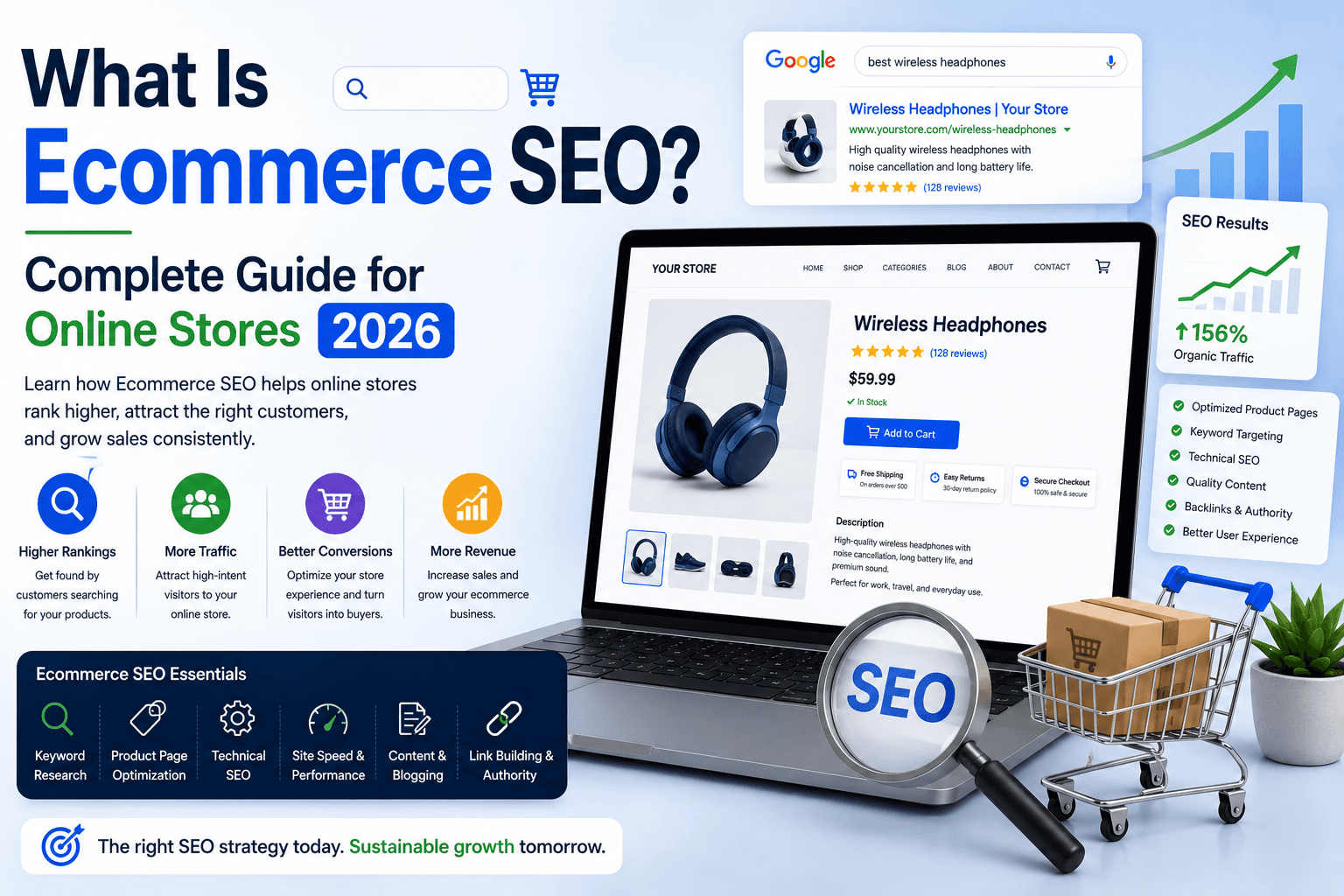
What Is Ecommerce SEO? Complete Guide for Online Stores 2026
Most online stores are stuck renting customers.
You pay $5,000 this month for 2,000 visitors. Next month, you pay another $5,000 for 2,000 more visitors. Stop paying, and traffic drops to zero instantly. Your growth is capped by your ad budget.
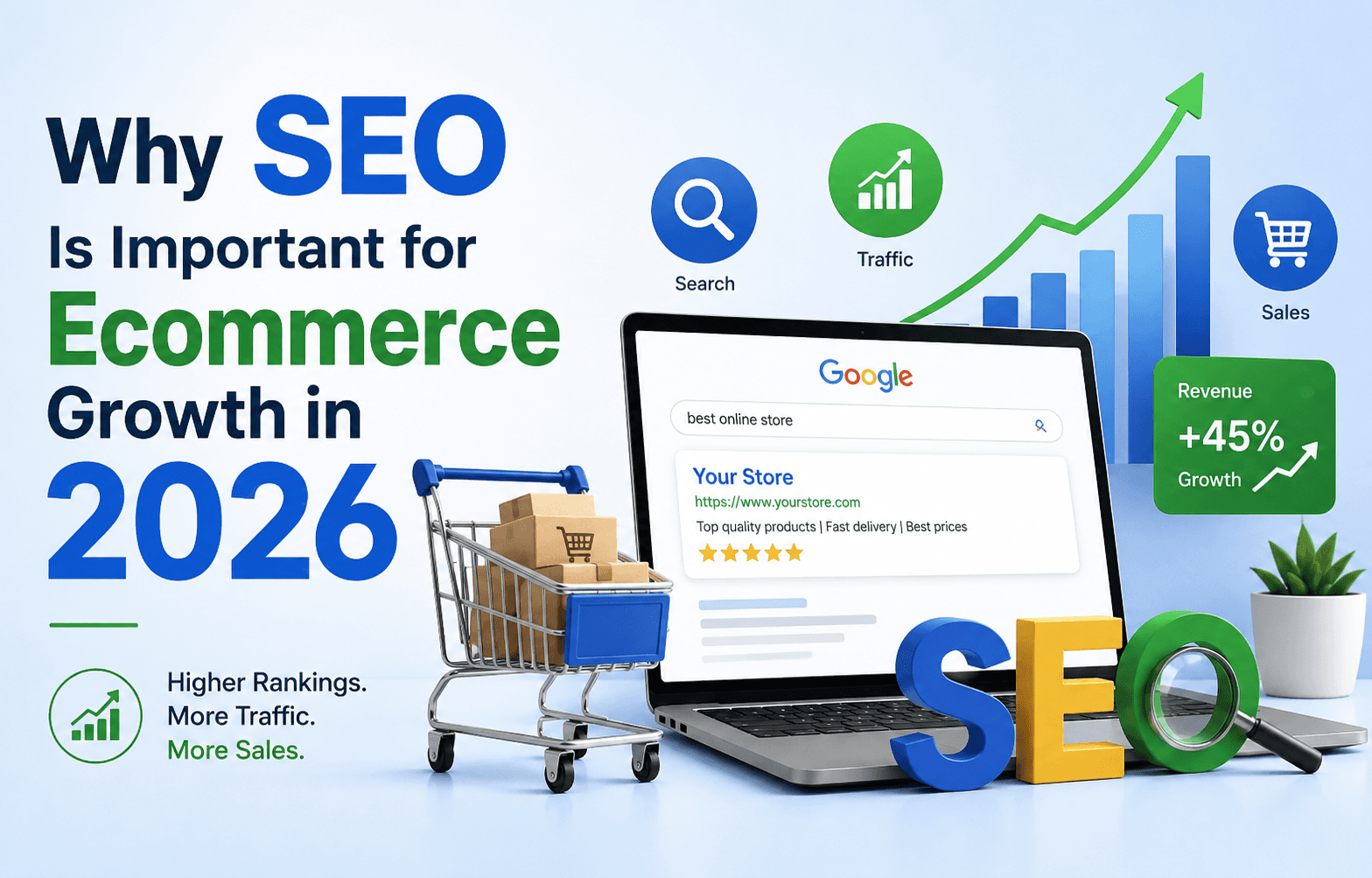
Ecommerce SEO changes the game by building permanent traffic assets. While ads are an expense you pay forever, SEO is an investment that compounds. Month 1 might deliver 500 organic visitors. Month 6 delivers 2,000. Month 12 delivers 5,000—all at zero additional cost per click.
This is not just about "ranking higher." It is about owning traffic instead of renting it.
What Is Ecommerce SEO?
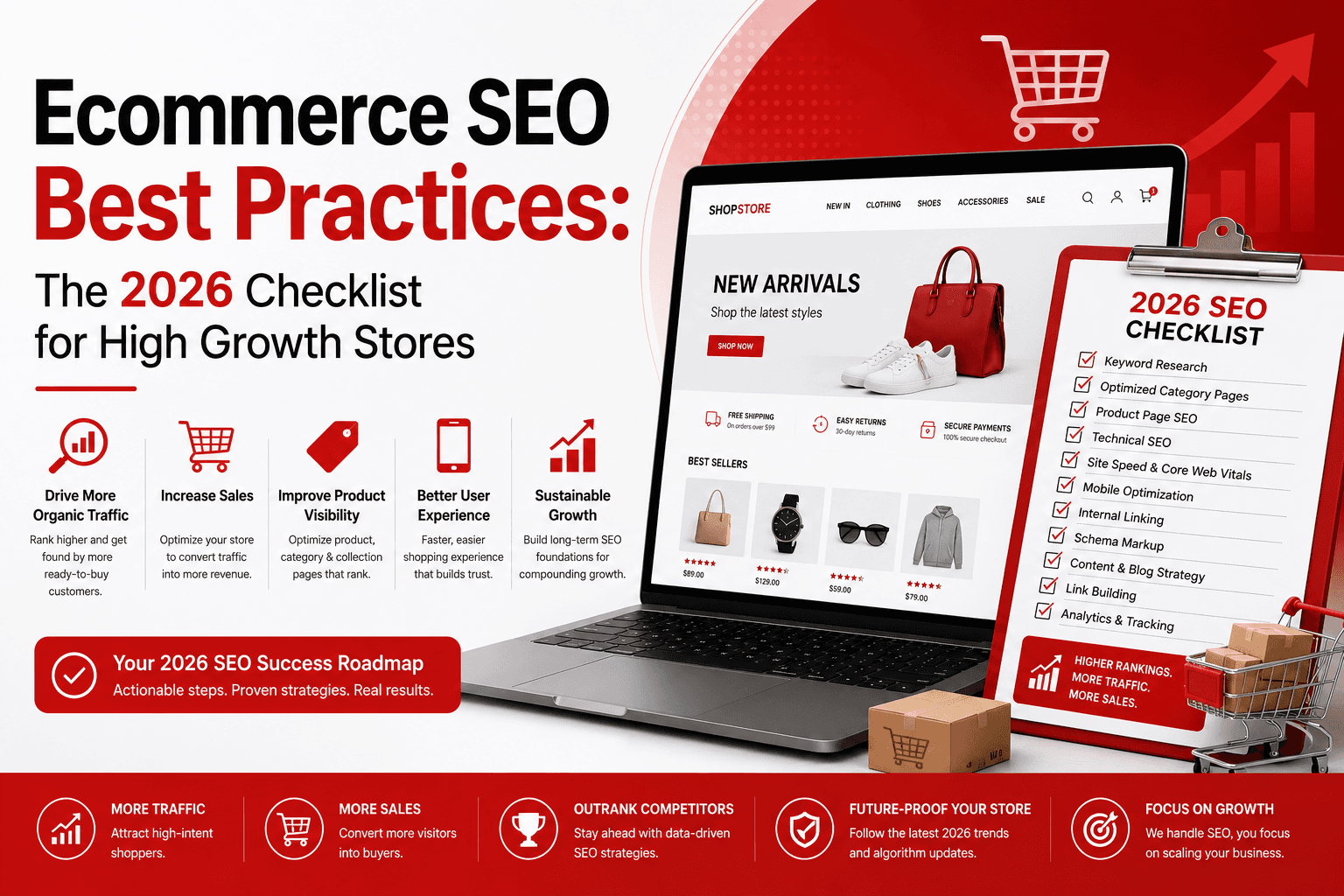
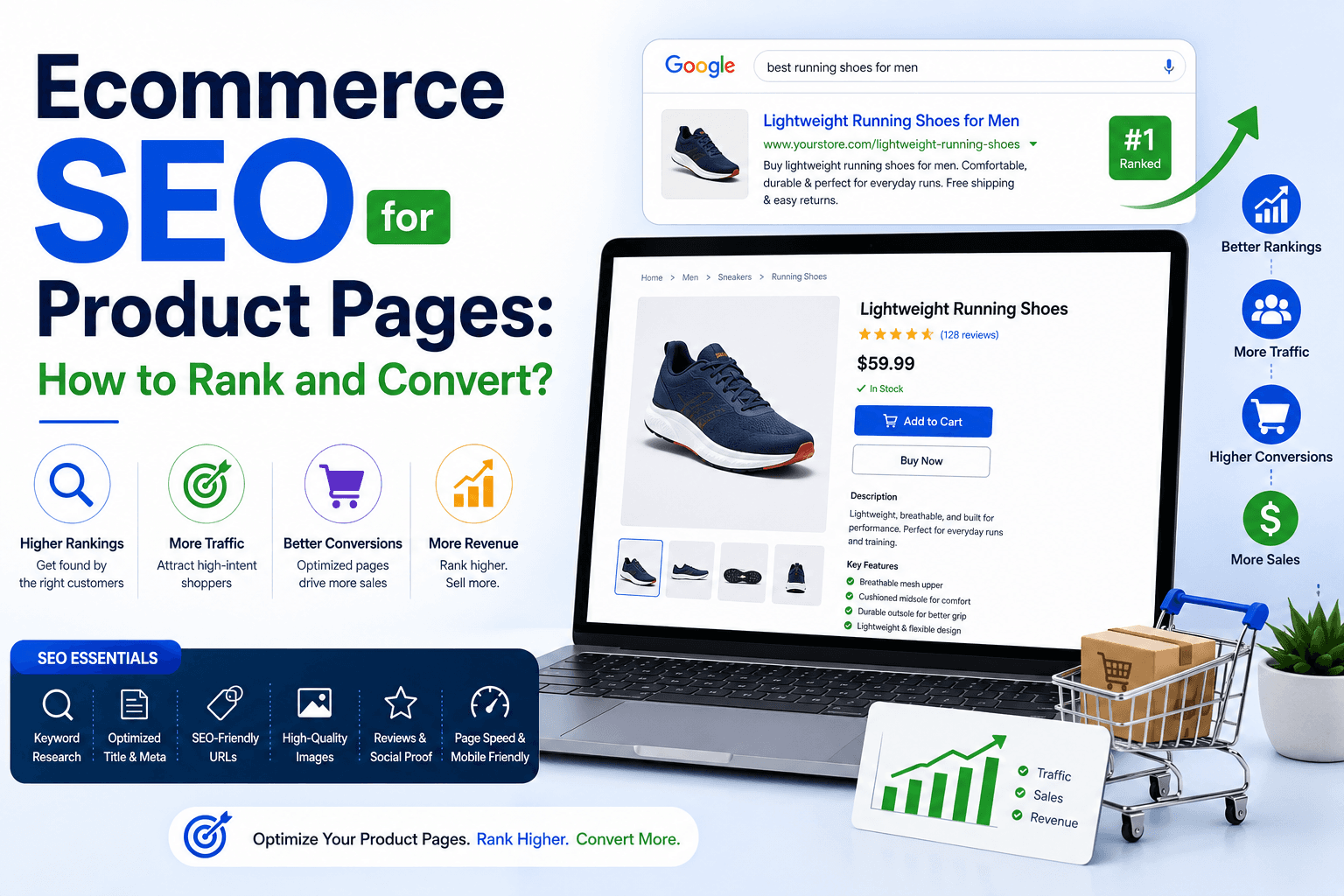
Ecommerce SEO is the process of optimizing an online store's product pages, category pages, and content to rank higher in search engines, capturing customers actively searching for products you sell and generating revenue through permanent organic traffic.
Simple explanation: When someone searches "buy running shoes online" or "best protein powder for weight loss," eCommerce SEO makes your store appear in those results instead of your competitors—without paying for every click.
The fundamental difference: Paid ads rent visibility. SEO builds permanent assets. Once your category page ranks #3 for "women's running shoes," it continues generating free traffic month after month without additional cost.
Why it matters: 92% of search traffic goes to Google's first page. If you are not ranking, you are invisible to customers ready to buy right now.
How Ecommerce SEO Differs from Traditional SEO
Do not use a "service business" strategy for a product catalog. The scale and complexity are fundamentally different.
| Feature | Traditional SEO | Ecommerce SEO (2026) |
|---|---|---|
| Scale | 20-50 pages | 500-50,000+ pages |
| Primary Driver | Service/Location pages | Category pages (60-80% of revenue) |
| Complexity | Low (mostly content) | High (faceted navigation, inventory, variants) |
| Goal | Lead generation (forms) | Direct sales (add to cart) |
| Optimization Focus | Local rankings, phone calls | Product rankings, conversions |
| Content Type | Service descriptions, testimonials | Product descriptions, buying guides |
Why this matters: Strategies that work for law firms and plumbers fail for online stores. Category pages drive 60-80% of eCommerce revenue—not service pages. Faceted navigation creates technical nightmares traditional sites never face. Direct sales require different optimization than lead capture.
The amateur mistake: Treating product pages like service pages and optimizing them one-by-one. Result: 1,000 products getting 5 visits each while category pages sit unoptimized.
The professional approach: Optimize 10 category pages first (each ranking for 50+ keywords), then systematically template the product catalog. Result: 10 categories getting 500 visits each, driving customers to optimized product grids.
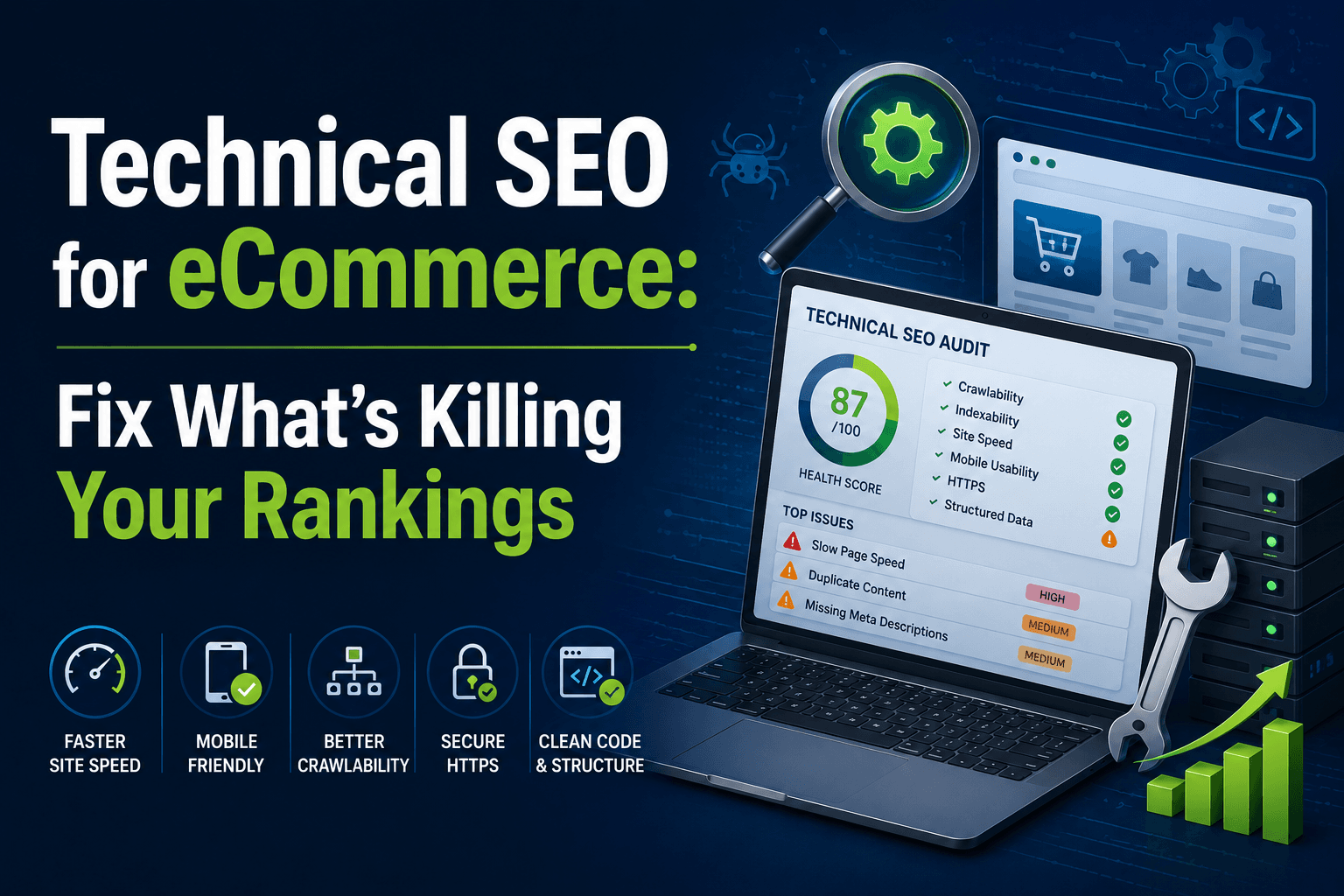
For technical implementation specific to large product catalogs, our technical SEO for eCommerce guide explains critical factors traditional SEO does not address.
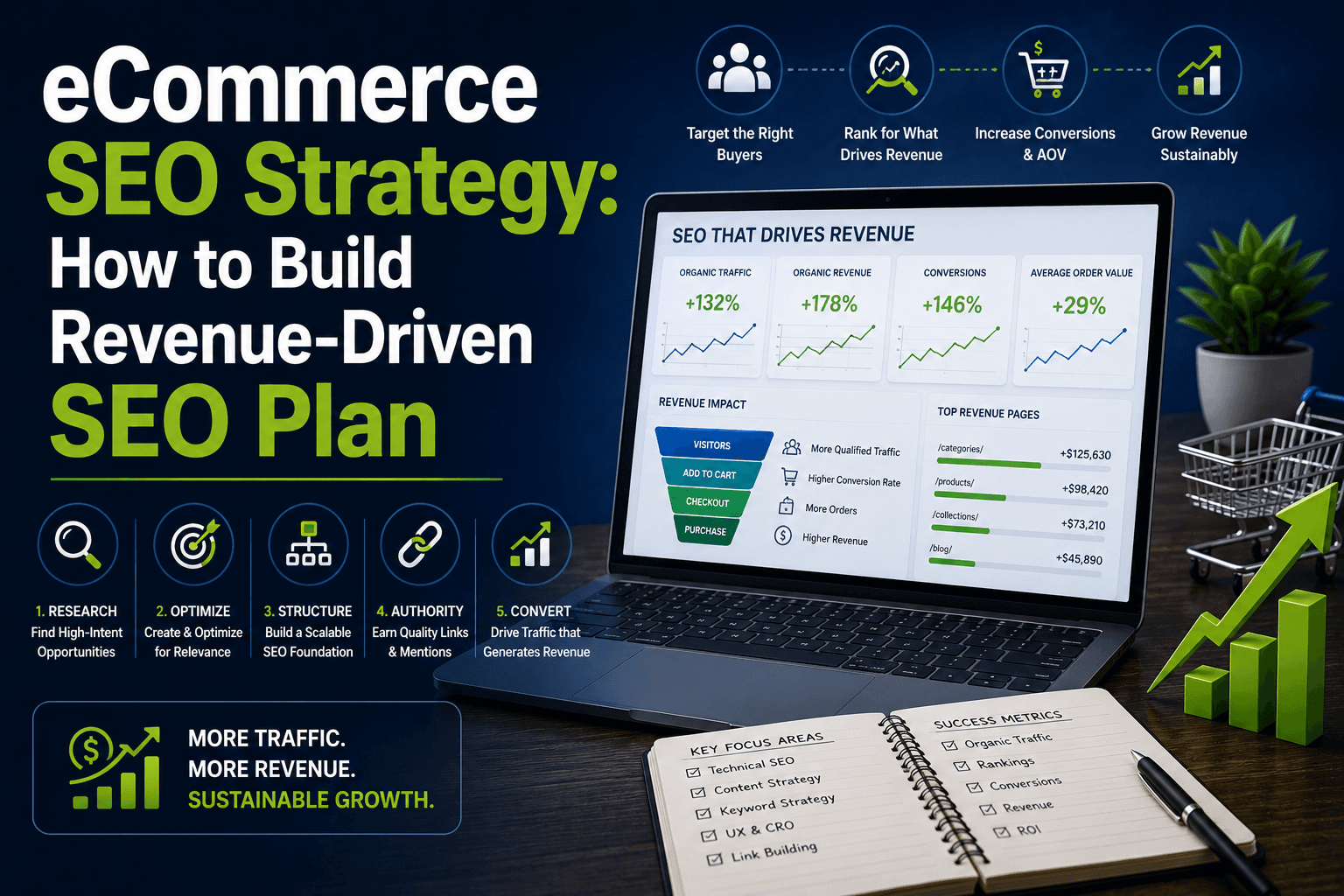
The 5 Pillars of Revenue-Focused Ecommerce SEO
We do not optimize just to "rank"—we optimize to move the revenue needle. Here is the 2026 framework for scaling an online store.
1. Technical Foundation: Protecting Your Crawl Budget
The Problem: If Google cannot find your products, they do not exist. In 2026, the #1 technical killer is crawl bloat. Uncontrolled filters turn 2,000 products into 47,000 useless URLs eating your crawl budget.
What to fix:
- INP under 200ms: If your "Add to Cart" button lags when customers click, you lose rankings AND conversions. Third-party scripts (chatbots, Facebook Pixel, analytics) block the main thread.
- Faceted navigation control: Noindex filter combinations without search demand. Use canonical tags on sorted pages.
- Product schema: JSON-LD markup tells Google (and AI search tools) your exact price, availability, brand, and specifications
- Mobile-first: 77% of visits happen on mobile—your checkout must be seamless on smartphones
- HTTPS security: SSL certificates protect customer data and improve rankings
The outcome: Google crawls your actual products instead of wasting resources on "Color=Red&Size=Large&Material=Cotton" variations nobody searches for.
For deep technical implementation, our technical SEO for eCommerce guide explains crawl budget management and Core Web Vitals optimization.
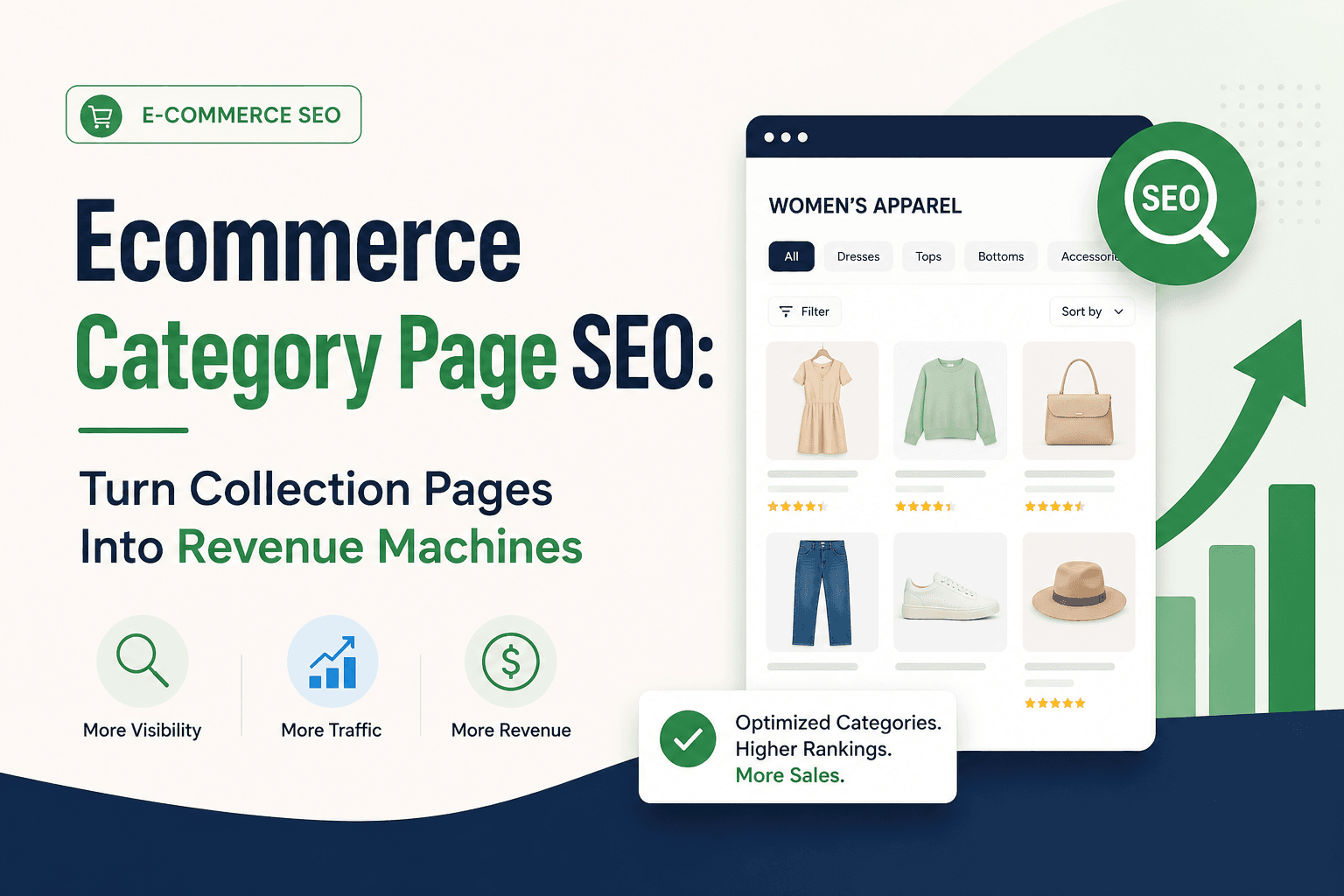
2. Category Pages: Your Highest-Leverage Revenue Engine
The Reality: Category pages drive 60-80% of organic revenue. One optimized category page ("women's running shoes") ranks for 50+ keywords and generates more sales than 100 individual product pages.
The winning tactic:
- Content placement: 1-2 sentences above product grid (immediate context), then 300-500 words below (SEO without blocking products)
- Keyword targeting: Optimize titles and H1s for commercial keywords ("buy women's running shoes," "best running shoes for women")
- Internal linking: Connect related categories and subcategories strategically
- FAQ sections: Answer common category questions (sizes, materials, use cases)
Amateur mistake: Spending 80% of time optimizing products getting 5 visits each. Professional approach: Spending 80% of time on 10 categories getting 500 visits each.
The outcome: Your category pages rank Page 1 for commercial searches, capturing thousands of monthly visitors ready to browse and buy.
3. Product Pages: The Long-Tail Catch-All
The Reality: Individual products capture specific, high-intent searches ("Nike Pegasus 40 Size 10 Wide"). Collectively, hundreds of optimized products generate thousands of long-tail visits.
Stop the duplicate content trap:
- Never use manufacturer descriptions: Google ignores them because 500 other stores use identical copy
- Write 150-300 unique words: Focus on benefits, use cases, sizing guidance—not just specifications
- Add customer reviews: Social proof + AggregateRating schema boosts rankings and conversions
- Use high-quality images: 6+ images per product, compressed for speed, descriptive alt text
- Implement E-E-A-T signals: Expert reviews, certifications, proof of experience proving you are legitimate (not an AI-generated dropshipping site)
The tiered approach: Detailed optimization for top 100 sellers. Systematic templates for remaining catalog. Do not try to perfectly optimize 5,000 products manually.
The outcome: Long-tail product searches find your store instead of Amazon or competitors using generic manufacturer copy.
4. Content Marketing: The Authority Builder That Sells
The Reality: Blog content should not just exist—it should drive revenue by capturing buyers during research phase and flowing authority to your money pages.
Content types that work:
- Buying guides: "How to Choose Running Shoes: 2026 Complete Guide" (captures commercial investigation, links to shoe categories)
- Comparison articles: "Brooks Ghost vs Nike Pegasus" (captures versus searches, links to both products)
- Use case guides: "Best Running Shoes for Flat Feet" (targets niche searches, links to relevant products)
The internal linking rule: Every blog post must link to 2-4 category or product pages. This flows authority from content (which earns backlinks) to revenue pages (which generate sales).
The outcome: You capture early-stage buyers, build topical authority, earn backlinks that lift all pages—while competitors only optimize transactional searches.
For avoiding common content mistakes, our common eCommerce SEO mistakes guide shows what undermines authority building.
5. Backlinks & E-E-A-T: The Trust Factor in the AI Era
The 2026 shift: In the age of AI-generated spam stores, Google prioritizes Experience and Authoritativeness. Earned mentions from industry experts and real customer reviews are now heavy ranking signals.
What Google evaluates:
- Experience signals: Customer photos, detailed reviews, expert product testing, certifications
- Authority signals: Backlinks from industry publications, expert endorsements, media mentions
- Trust signals: Secure checkout (HTTPS), clear policies, professional design, responsive support
Link building methods:
- Digital PR: Create original research or data studies earning media coverage
- Expert contributions: Provide quotes for journalists (HARO, Featured)
- Product reviews: Send products to relevant bloggers for authentic review content
- Partnerships: Collaborate with complementary brands on co-marketing
The outcome: Google sees you as legitimate authority instead of dropshipping spam. You rank higher with fewer links than competitors lacking E-E-A-T signals.
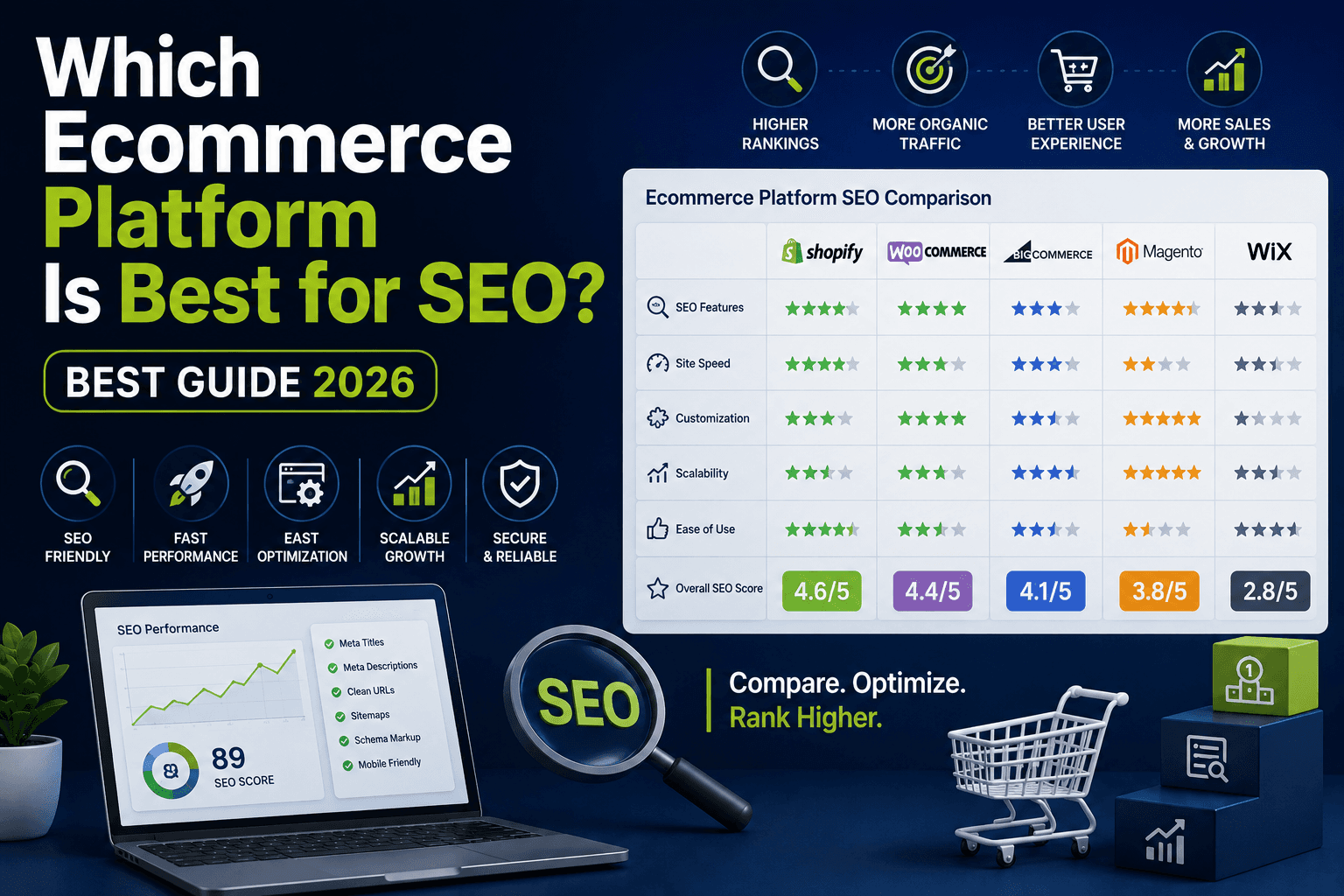
For platform-specific optimization, read our Shopify SEO guide. To understand platform selection impact, see our guide on which eCommerce platform is best for SEO. To avoid common pitfalls, review our common eCommerce SEO mistakes guide. For technical deep-dive, explore our technical SEO for eCommerce guide. Contact our team at thedevelopment.com.au/contact-us for expert guidance.