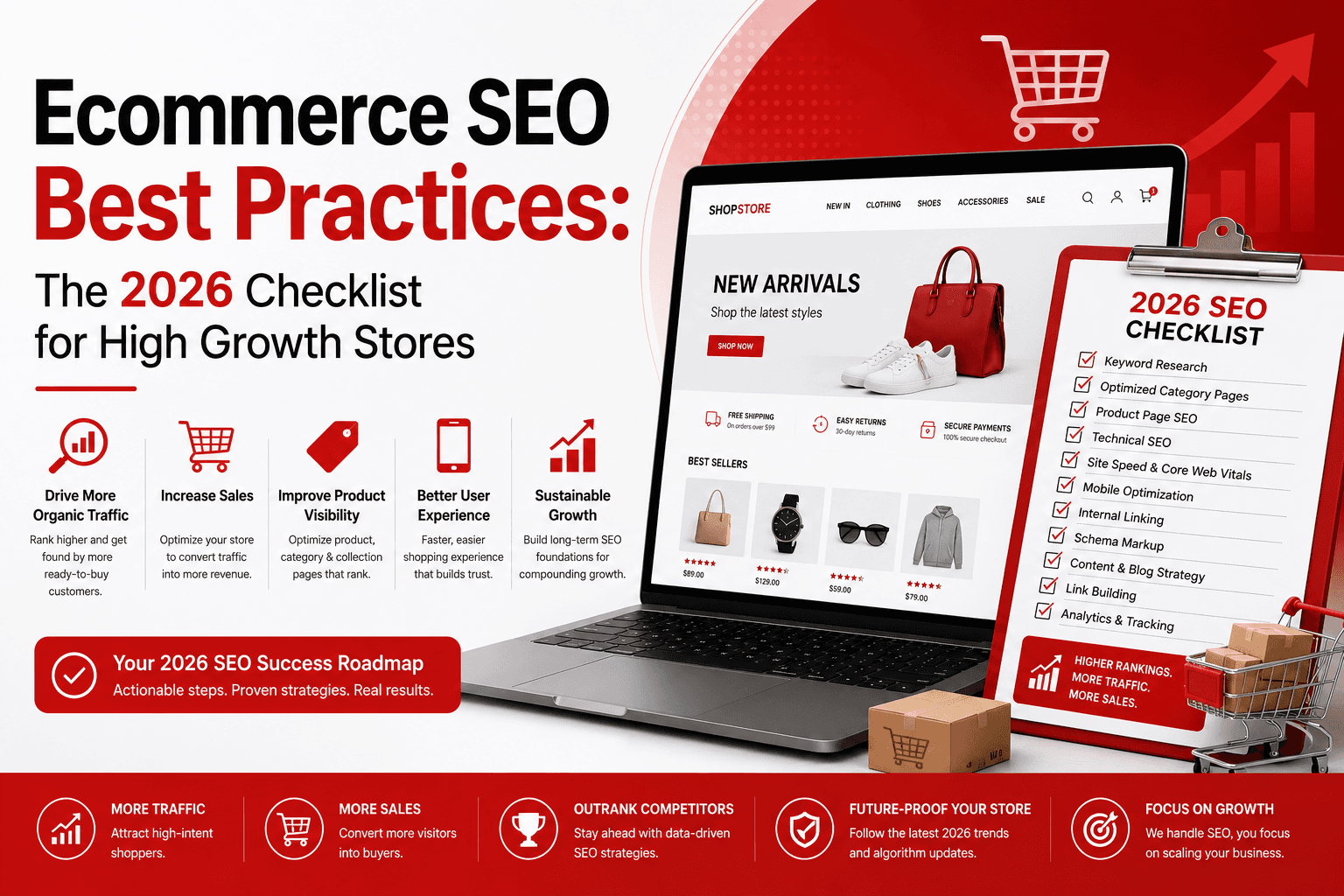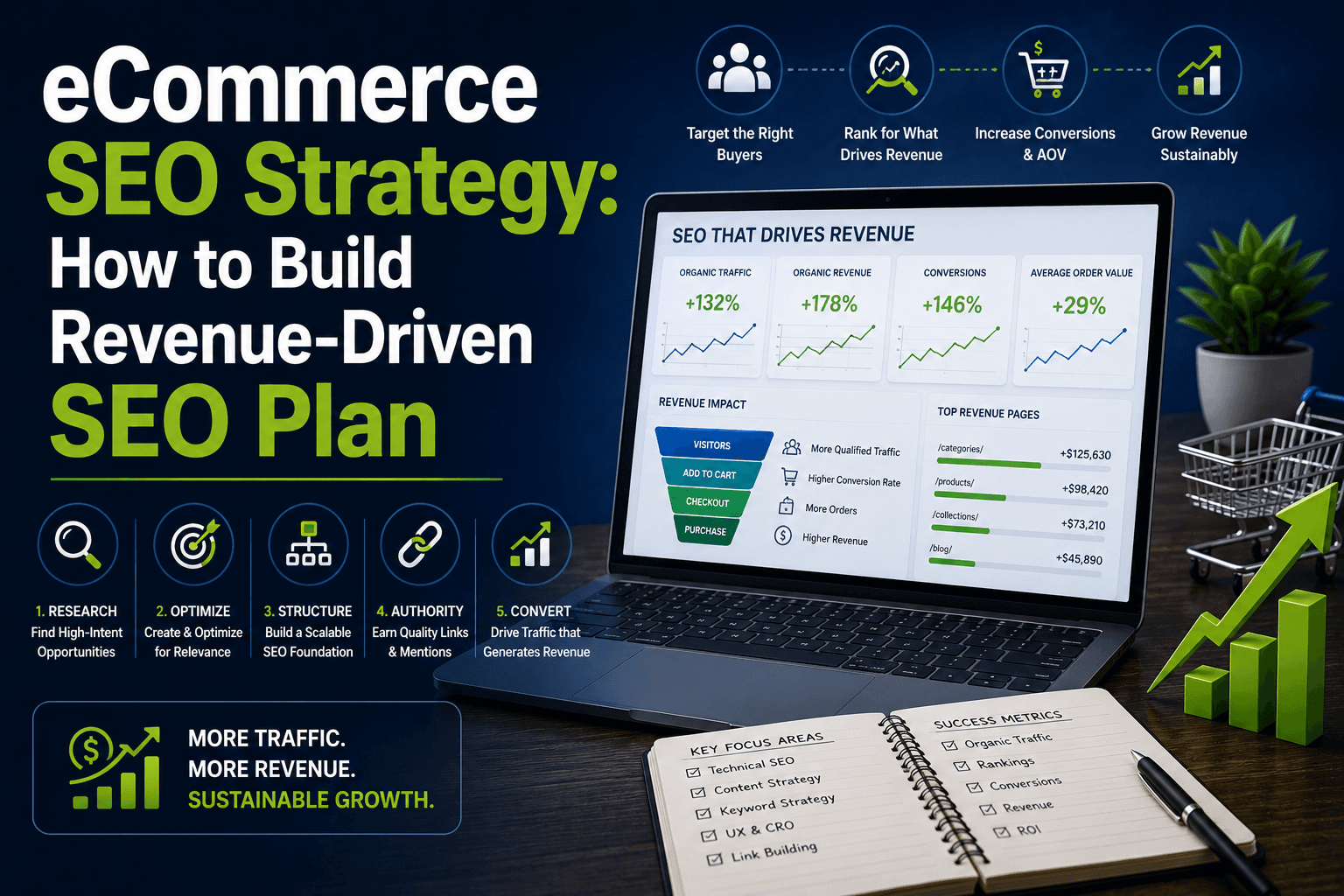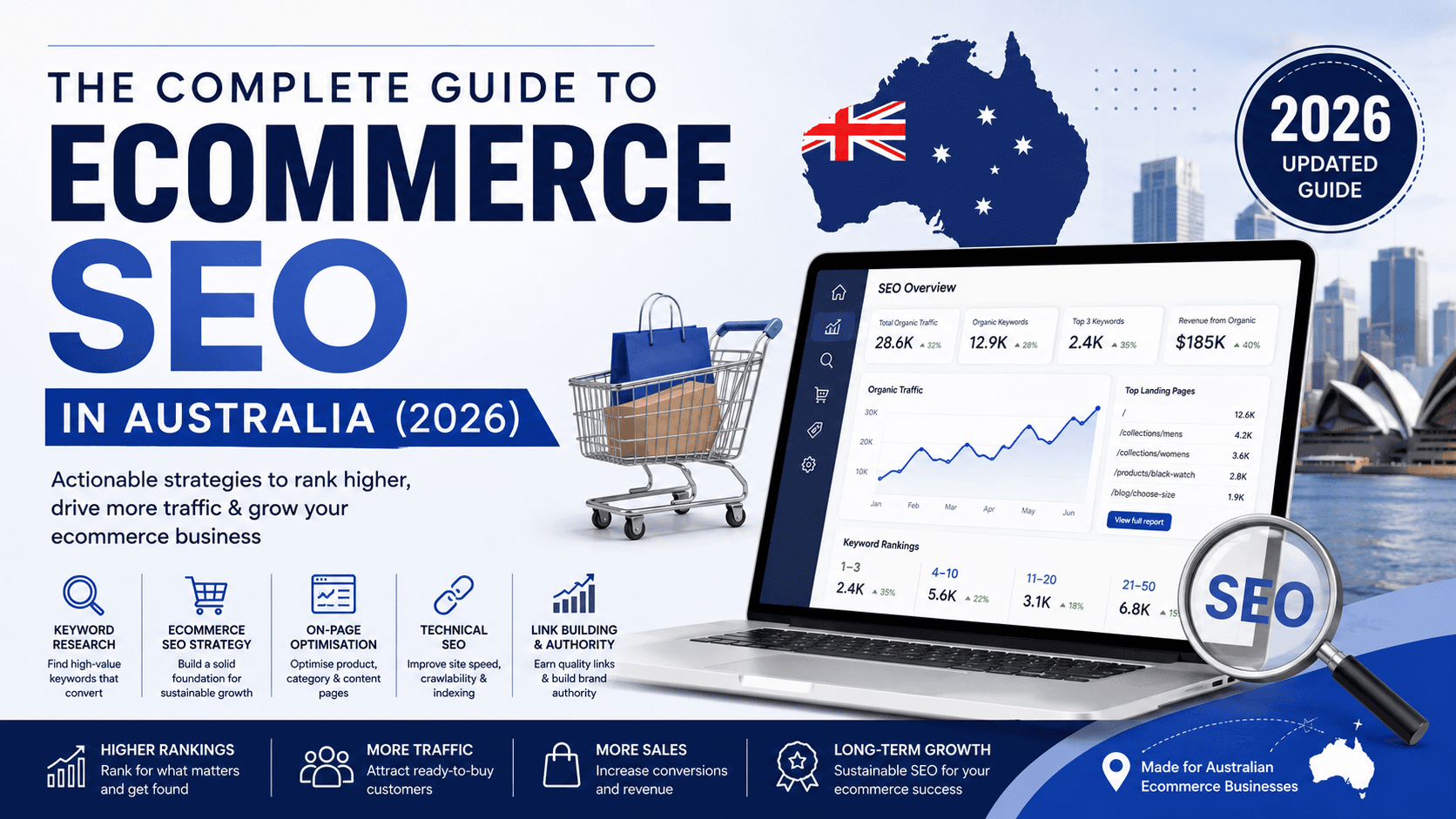
If you run an online store in Australia, organic search is your highest-ROI acquisition channel — and most ecommerce businesses are barely scratching the surface of what's possible. This guide is the only resource you'll need to understand, implement, and scale ecommerce SEO in the Australian market in 2026.
Whether you're on Shopify, WooCommerce, or a custom platform, the fundamentals are the same: get the technical foundations right, build product and category pages that rank, earn authoritative backlinks, and turn organic traffic into revenue. We'll cover all of it — including a real Australian case study showing what's possible when you do this properly.
|
68% of online experiences begin with a search engine |
$62B Australian ecommerce market value in 2025 |
3.5× higher ROI for SEO vs paid ads over 12 months |
1. What Is Ecommerce SEO — and Why Does It Matter in Australia?
Ecommerce SEO is the practice of optimising your online store to rank higher in search engine results pages (SERPs) for the product and category searches your customers are already making. Unlike paid advertising — where visibility disappears the moment you stop spending — SEO builds compounding organic traffic that grows in value over time.
In the Australian context, this means appearing in Google's results when someone searches "trail running shoes Australia", "buy ergonomic office chair Sydney", or "premium dog harness Australia" — commercial-intent queries with real purchase intent behind them.
Ecommerce SEO vs General SEO: Key Differences
General SEO principles apply, but ecommerce has unique challenges:
-
Scale: An ecommerce site might have thousands of product pages — each needing unique, optimised content.
-
Duplicate content: Product variations, filtered URLs, and similar descriptions create duplicate content risks.
-
Crawl budget: Search engines have limited crawl capacity per site — wasting it on thin pages costs rankings.
-
Conversion alignment: SEO traffic only creates value if it converts. Product pages must do both jobs simultaneously.
-
Seasonality: Australian ecommerce has distinct peaks (Christmas, EOFY, Black Friday) that require tactical content planning.
|
📌 THE CORE GOAL Ecommerce SEO in Australia is not about getting any traffic — it's about getting the right traffic: high-intent shoppers who are ready to buy, searching for exactly what you sell. |
2. Technical SEO Setup: The Foundation Everything Else Builds On
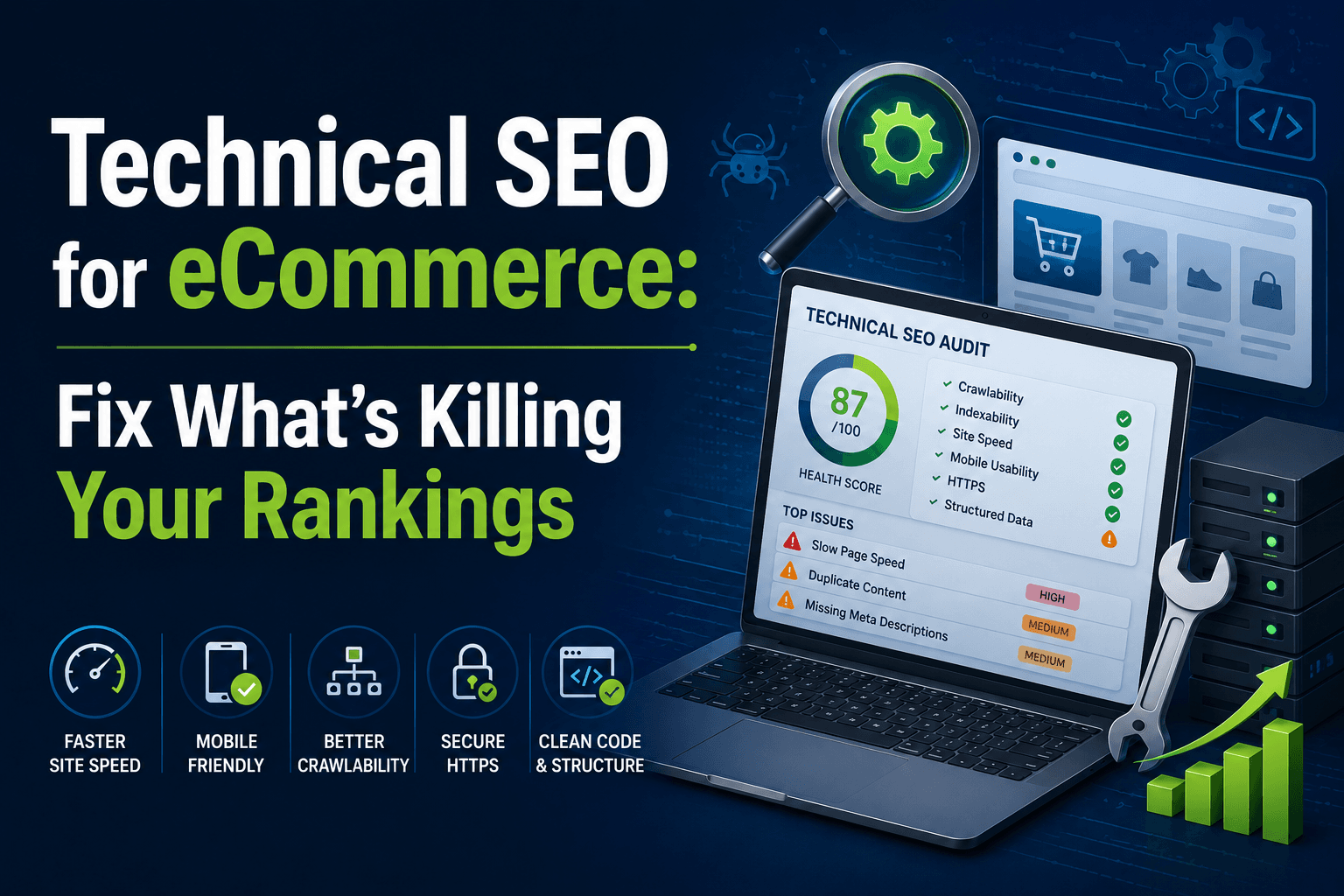
Before you write a single word of optimised content, your site's technical infrastructure needs to be solid. Google cannot rank what it cannot crawl, index, and understand. Technical issues are the silent killer of ecommerce SEO — everything looks fine on the surface, but the site bleeds rankings it should be winning.
Site Architecture & URL Structure
A logical, flat site architecture helps both users and search engines navigate your store efficiently. The ideal structure keeps every important page within 3 clicks of the homepage:
Homepage → Category Page → Subcategory → Product Page
For URL structure, keep it clean and descriptive:
-
Good: yourstore.com.au/running-shoes/trail/mens-speedcross
-
Bad: yourstore.com.au/product?cat=12&id=4892&variant=blue
Avoid deeply nested URLs, avoid parameters in URLs where possible (use canonical tags or robots.txt directives instead), and use hyphens — not underscores — to separate words.
Crawlability & Indexation
Configure your robots.txt file to block search engines from crawling faceted navigation, cart pages, login pages, and search results pages. These pages waste crawl budget without contributing to rankings.
Submit an XML sitemap to Google Search Console. For large stores, use a sitemap index file that references separate sitemaps for products, categories, and blog content. Check your Search Console coverage report monthly to catch indexation issues early.
Core Web Vitals & Page Speed
Google's Core Web Vitals — Largest Contentful Paint (LCP), Interaction to Next Paint (INP), and Cumulative Layout Shift (CLS) — are confirmed ranking factors. For Australian ecommerce, mobile performance is especially critical given that over 60% of local online shopping sessions occur on mobile devices.
-
LCP target: Under 2.5 seconds (time for main content to load)
-
INP target: Under 200ms (responsiveness to user interaction)
-
CLS target: Under 0.1 (visual stability — no elements jumping around)
Common fixes: compress and serve images in WebP format, implement lazy loading, use a CDN, minimise unused JavaScript, and upgrade your hosting if necessary.
HTTPS & Site Security
All Australian ecommerce sites must run on HTTPS. Google flags non-HTTPS stores as "Not Secure" — a conversion killer as well as a ranking disadvantage. Ensure your SSL certificate covers all subdomains and that all internal links and redirects use the HTTPS version.
Structured Data / Schema Markup
Schema markup communicates product information directly to Google, enabling rich results that improve click-through rates. Implement the following schema types for ecommerce:
-
Product schema: Name, price, availability, SKU, brand, description
-
Review schema: Aggregate rating, review count (significantly improves CTR)
-
BreadcrumbList schema: Shows navigation path in search results
-
Organization schema: ABN, address, contact details (important for Australian businesses)
|
⚠️ SHOPIFY NOTE Shopify handles some technical SEO automatically (sitemaps, canonical tags) but has known limitations — URL structures include /products/ and /collections/ prefixes that can't be changed, and handling of faceted navigation requires careful configuration. Work with a specialist Shopify SEO agency to navigate these constraints. |
3. Product Page Optimisation: Rank and Convert Simultaneously
Product pages are where ecommerce SEO pays its bills. These pages must do two things at once: rank for commercial-intent keywords AND convert visitors into buyers. Most ecommerce sites sacrifice one for the other — the best ones do both.
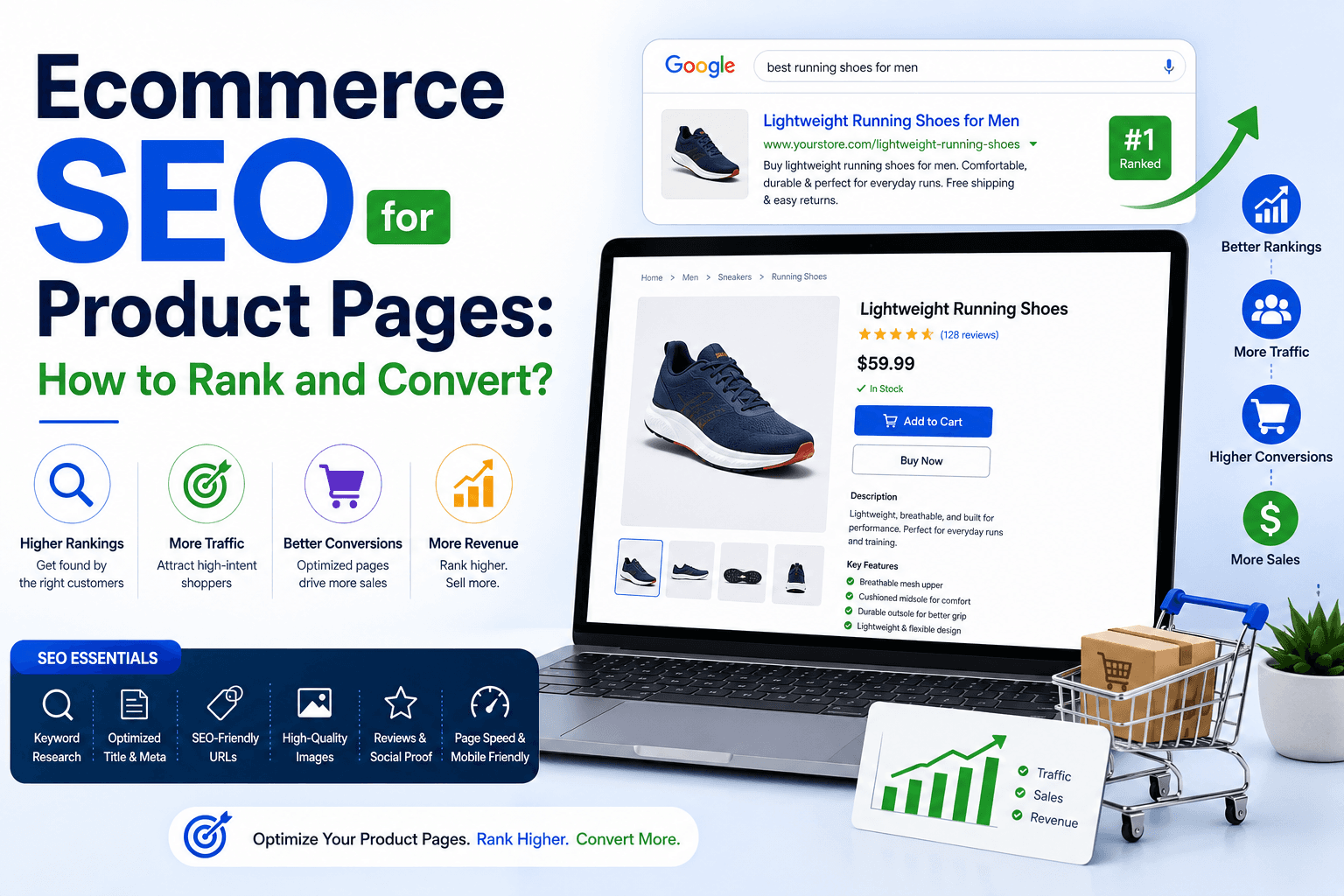
Keyword Research for Product Pages
Start with buyer-intent keywords — terms that indicate someone is ready to purchase:
-
"buy [product name] Australia"
-
"[product name] free shipping Australia"
-
"best [product category] Australia 2026"
-
"[product name] cheap" / "[product name] price"
Use tools like Ahrefs, SEMrush, or Google Keyword Planner to find Australian-specific search volumes. Pay attention to local modifiers — "Australia", city names, "free shipping" — which filter out international competition and surface higher-intent searches.
Writing Product Titles & Meta Tags
Your product page title tag is the single most important on-page SEO element:
-
Formula: [Primary Keyword] — [Key Benefit/Differentiator] | [Brand Name]
-
Example: Trail Running Shoes for Men — Waterproof & Lightweight | SpeedFoot Australia
-
Length: 50–60 characters to avoid truncation in search results
Meta descriptions don't directly affect rankings, but they dramatically affect click-through rate. Write them as ad copy: lead with the key benefit, include a call to action, and mention free shipping or a key differentiator if applicable.
Product Descriptions That Rank
Manufacturer descriptions are an ecommerce SEO liability. If you're using the same description as every other retailer carrying the product, you're competing in a duplicate content race you cannot win.
Write unique descriptions of at least 200–300 words per key product. Cover:
-
Primary keyword — naturally in the first 100 words
-
Features vs benefits — what it does AND what that means for the customer
-
Use cases — who is this for? What problem does it solve?
-
Specifications — dimensions, materials, compatibility, sizing guides
-
Social proof hook — reference that it's highly rated or link to reviews section
Image Optimisation
Product images are often the largest files on the page — and the biggest drag on load speed. Follow these rules:
-
File format: WebP for all product images, with JPEG fallback
-
File size: Under 100KB for product thumbnails, under 300KB for hero images
-
Alt text: Descriptive and keyword-aware: "navy blue waterproof trail running shoes men's size 10" not "product-image-1.jpg"
-
File names: hyphen-separated descriptive names before uploading
User-Generated Content & Reviews
Product reviews are one of the most underutilised SEO assets in Australian ecommerce. They create unique, keyword-rich content on your product pages automatically — content that often contains exactly the language real customers use in their searches. Use a review platform like Okendo, Yotpo, or Judge.me and implement review schema markup to get star ratings in your search results.
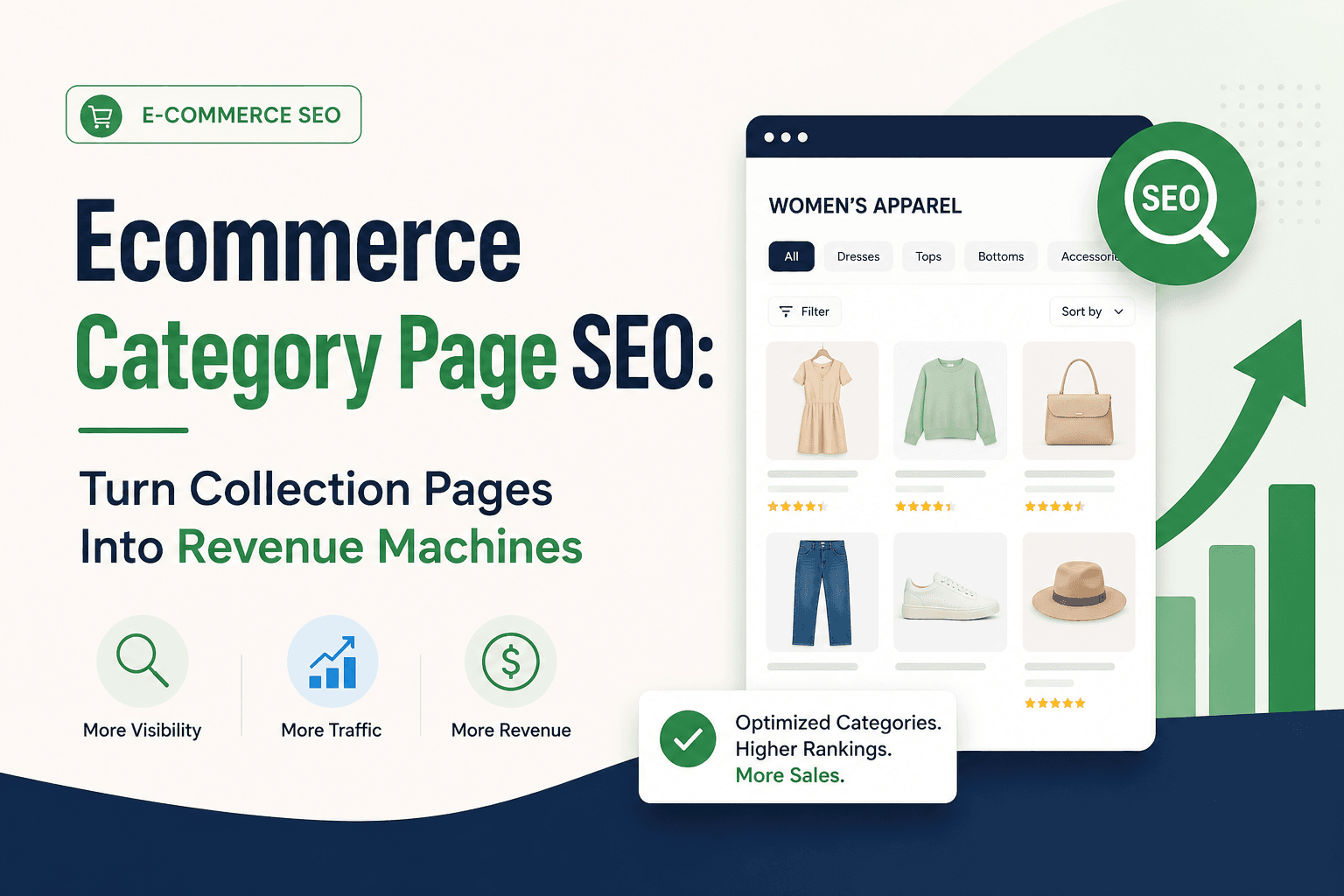
4. Category Page Optimisation: Your Highest-Traffic Opportunity
Category pages are the most underoptimised pages on most Australian ecommerce sites — and they represent your biggest single SEO opportunity. While product pages target specific items, category pages capture the broader, higher-volume searches: "running shoes Australia", "ergonomic office chairs", "premium dog accessories".
These are typically higher funnel searches with enormous volume, and they're often easier to rank for than you'd think — because most ecommerce sites give their category pages almost no SEO love.
Category Page Content Strategy
The biggest mistake Australian ecommerce stores make with category pages: they are nothing but a grid of products. Google has no text to crawl, no context to understand, and no reason to rank the page above a competitor that explains what the category is and why their selection is worth visiting.
Add the following to every key category page:
-
H1 with primary keyword: "Men's Trail Running Shoes Australia" — clear, keyword-forward, no cleverness
-
Introductory copy (150–300 words): Above or below the product grid. Explain what's in the category, what to look for, and why your store is the right place to buy.
-
Buying guide section: A short FAQ or guide that captures informational searches ("how to choose trail running shoes") while remaining on the commercial category page.
-
Internal links: Link to related subcategories and your most important product pages from the category page copy.
Handling Filters and Faceted Navigation
Faceted navigation (size, colour, price filters) creates a URL explosion that can generate thousands of near-duplicate pages. Manage this with:
-
Canonical tags: Point filtered URLs to the clean category URL
-
noindex directives: For low-value filter combinations
-
robots.txt disallow: For parameter-heavy filter URLs that shouldn't be crawled at all
-
Exception: If a filter combination generates significant search volume (e.g., "red running shoes women"), consider creating a dedicated landing page for it rather than relying on a filter URL.
Internal Linking From Category Pages
Category pages should act as hubs that distribute PageRank to your most important product pages. Link to bestsellers, featured products, and new arrivals with descriptive anchor text — not just product names, but benefit-led anchors where natural.
5. Link Building for Australian Ecommerce: Earning Authority at Scale
Backlinks remain one of Google's strongest ranking signals. For Australian ecommerce sites, the challenge is earning links that are both relevant (from sites in your niche or market) and authoritative (from established, trusted Australian domains).
The good news: ecommerce businesses have natural link-earning opportunities that pure content sites don't — products, brand stories, stockists, and PR-worthy moments are inherently linkable assets.
Australian-Specific Link Building Strategies
1. Supplier & Manufacturer Links
If you stock or distribute branded products, get listed on the brand's official Australian stockist page or dealer directory. These are high-authority links that are often just an email away.
2. Digital PR & Australian Media
Pitch your products or brand story to Australian online media, industry publications, and lifestyle blogs. Australian Consumer Association (CHOICE), Australian Financial Review's lifestyle section, and niche Australian vertical publications like Inside Retail are all legitimate targets. A single mention in a high-DA Australian publication can move the needle significantly.
3. Blogger & Influencer Outreach
Australian lifestyle, fitness, outdoor, and parenting bloggers regularly publish product roundups and reviews. Unlike pure influencer campaigns, these earn you do-follow backlinks that compound in value over time. Prioritise bloggers with genuine domain authority (DA 30+) over pure social follower counts.
4. Local & Industry Directories
Beyond generic directories, get listed in industry-specific Australian directories. If you sell outdoor gear, listings on Australian bushwalking forums and hiking association sites carry both authority and relevance.
5. Content-Driven Link Earning
Create genuinely useful content that Australian sites will want to link to:
-
Australian product comparison guides ("Best Trail Shoes for Australian Terrain 2026")
-
Original data or research about your market segment
-
Definitive buying guides that outperform what's currently ranking
-
Tools or calculators (size finders, compatibility checkers)
|
✅ Worth Pursuing |
❌ Avoid |
|
|
6. Real Results: EzyDog Australia Case Study
|
CASE STUDY How We Scaled EzyDog Australia's Shopify Store for Growth and Revenue EzyDog is one of Australia's leading premium dog gear brands — producing harnesses, collars, leads, and accessories trusted by working dog owners and pet enthusiasts nationally. Despite a strong product range and brand reputation, their Shopify store was underperforming in organic search and failing to convert the traffic it did attract. THE PROBLEM
THE APPROACH The Development Agency rebuilt the EzyDog Shopify store with an SEO-first architecture — restructuring the category hierarchy, rewriting product descriptions with unique keyword-targeted copy, implementing full schema markup, and redesigning the user experience around conversion principles. Technical performance was overhauled with image compression, lazy loading, and CDN implementation to hit Core Web Vitals targets. THE RESULTS Measurable organic traffic growth within the first 90 days post-launch Significant improvement in keyword rankings for target commercial terms Improved revenue per session driven by conversion-optimised UX Read the full case study: thedevelopment.com.au/case-study/ezydog |
7. Platform Considerations: Shopify, WooCommerce & Beyond
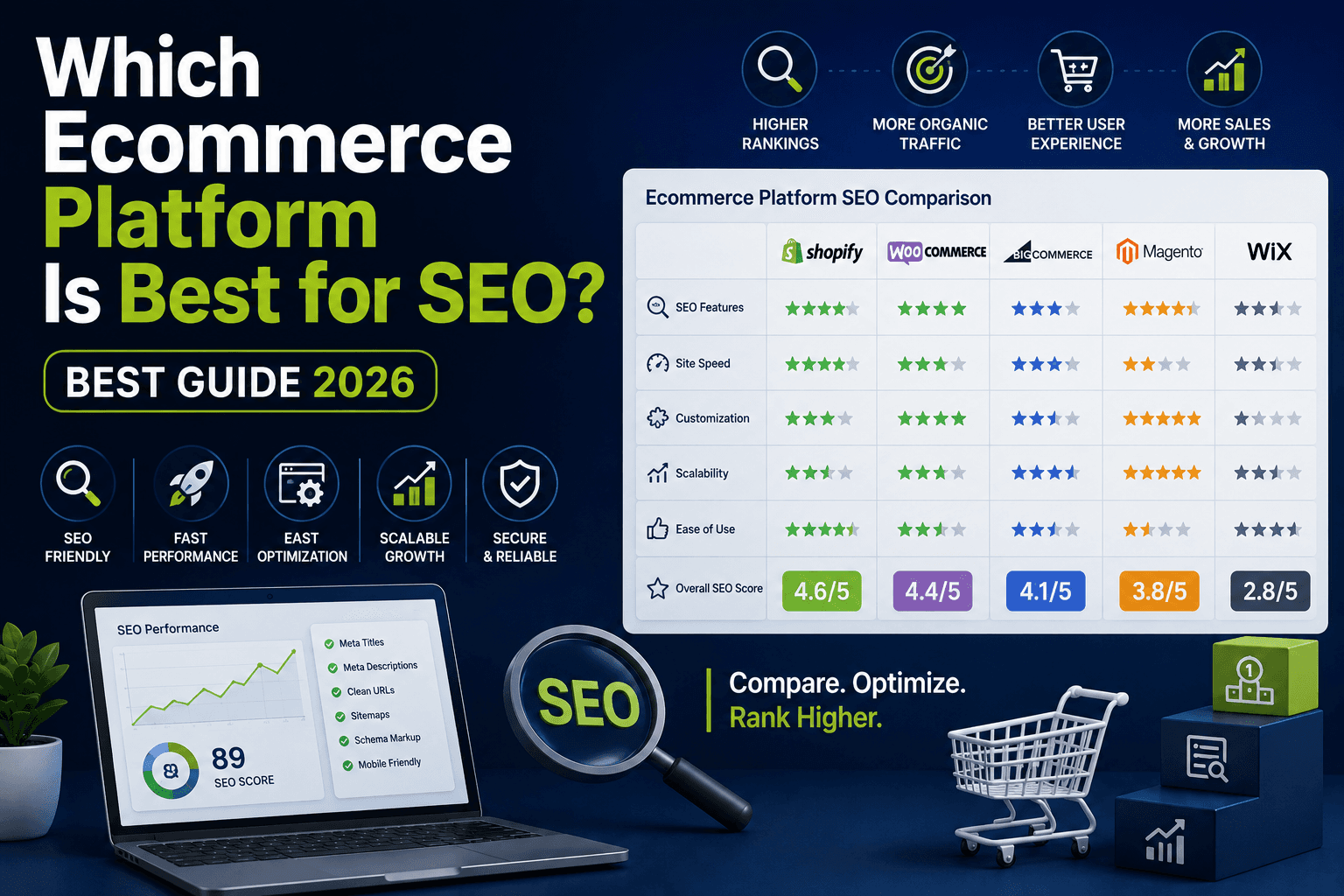
Your ecommerce platform determines what SEO is possible out-of-the-box — and what requires workarounds or specialist knowledge. Here's how the main Australian platforms stack up:
Shopify
Shopify is Australia's dominant ecommerce platform and handles many SEO basics automatically (sitemaps, canonical tags, mobile-responsive themes). However, it has structural constraints — the /products/ and /collections/ URL path is fixed, and handling faceted navigation cleanly requires careful configuration. For growing Australian ecommerce brands, working with a specialist Shopify development agency is the fastest way to unlock Shopify's full SEO potential.
WooCommerce
WooCommerce on WordPress offers maximum flexibility — you can customise virtually every SEO element. The trade-off is complexity: it requires more technical management, regular updates, and careful plugin selection (Yoast SEO or Rank Math are the standard choices). Page speed requires more active management than Shopify.
Custom Platforms
Fully custom ecommerce platforms give complete control but require in-house or agency SEO implementation from the ground up. Every element — structured data, canonical tags, sitemaps, robots.txt — must be built intentionally. This is high effort but high reward when done correctly.
|
💡 PLATFORM RECOMMENDATION For most Australian SMB ecommerce businesses, Shopify with a specialist agency is the optimal combination in 2026 — balancing out-of-the-box functionality, theme ecosystem, and scalability. WooCommerce suits businesses that need complex customisation and have technical resources to manage it. |
8. Content Marketing: Capturing the Full Funnel
The biggest ecommerce SEO opportunity most Australian brands ignore: informational content that captures shoppers before they're ready to buy, nurtures them, and channels them into your product pages when purchase intent arrives.
For every commercial keyword ("buy trail running shoes"), there are 5–10 informational queries surrounding it ("how to choose trail running shoes", "trail running shoes vs road shoes", "best trail terrain for beginners"). Ranking for these establishes your store as an authority — and surfaces it at every stage of the customer journey.
Content Types That Drive Ecommerce SEO
-
Buying guides: "The Complete Guide to Choosing a Dog Harness" — captures top-funnel traffic and links naturally to your category pages
-
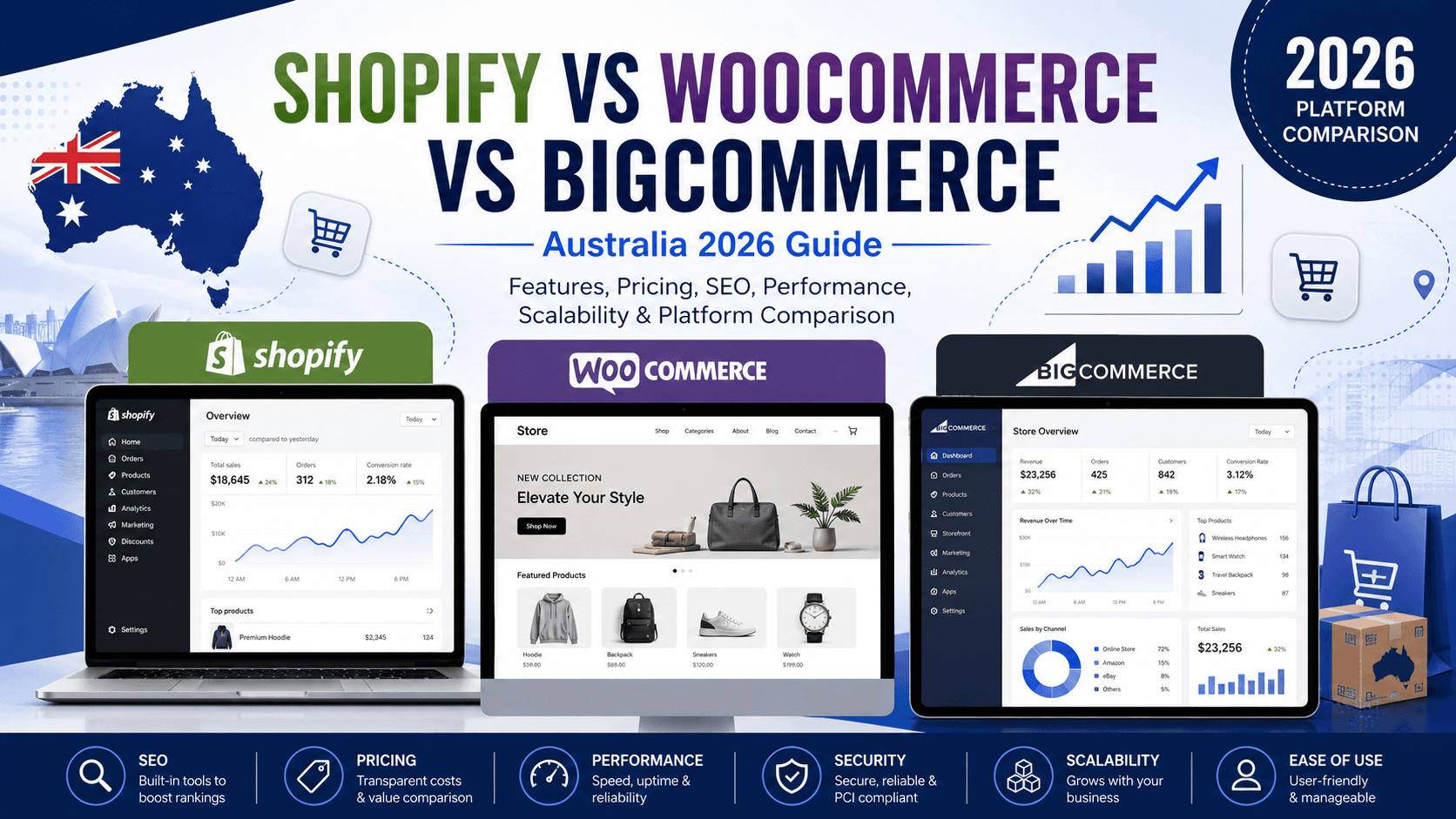
Comparison posts: "Shopify vs WooCommerce for Australian Retailers" — targets comparative searches with high conversion intent
-
How-to content: "How to Fit a Dog Harness Correctly" — builds trust and demonstrates product knowledge
-
Seasonal content: "Best Gifts for Runners — Australia 2026" — captures gift-buying traffic with strong purchase intent
-
Location pages: If you have physical presence or offer local delivery, localised landing pages capture location-specific searches
|
📌 KEY PRINCIPLE Every piece of content should have a clear internal link path to at least one product or category page. Informational content that doesn't channel readers toward purchase opportunities is a missed conversion. |
9. Measuring Ecommerce SEO Performance
You can't manage what you don't measure. These are the KPIs that matter for Australian ecommerce SEO:
Primary KPIs
-
Organic revenue: The ultimate metric — tracked in Google Analytics 4 (GA4) with ecommerce tracking enabled
-
Organic sessions: Total non-paid search traffic. Segment by landing page to understand which pages are performing.
-
Keyword rankings: Track a core set of commercial and informational target keywords weekly. Tools: Ahrefs, SEMrush, or SE Ranking.
-
Organic conversion rate: What percentage of organic visitors complete a purchase? Industry benchmark: 1.5–3.5% for Australian ecommerce.
Secondary KPIs
-
Crawl errors: Monitored in Google Search Console — fix 404s, server errors, and redirect chains promptly
-
Core Web Vitals scores: Monitor in Search Console's Experience report and PageSpeed Insights
-
Backlink growth: New referring domains month-over-month, tracked in Ahrefs or Moz
-
Click-through rate (CTR): From Search Console. Low CTR on high-ranked pages signals a title/meta description problem.
|
⚠️ GA4 ECOMMERCE SETUP Google Analytics 4 requires manual ecommerce event setup for most platforms. This is not automatic on all Shopify themes. Verify your GA4 ecommerce tracking is correctly firing purchase, add-to-cart, and checkout events — broken tracking is one of the most common (and invisible) issues we see in Australian ecommerce sites. |
10. Ecommerce SEO Trends in Australia for 2026
The SEO landscape is shifting. Here's what Australian ecommerce operators need to stay ahead of in 2026:
AI Overviews in Google Search
Google's AI Overviews (formerly Search Generative Experience) are appearing more frequently for product-related queries. While these reduce some click-through rates on informational queries, commercial and transactional searches still drive high click-through — especially when your product pages are well-structured with schema markup that Google's AI can surface.
Entity-Based SEO
Google increasingly understands brands, products, and concepts as entities — not just strings of keywords. Building your brand's entity strength through consistent NAP data, Google Business Profile optimisation, and mentions across Australian publications and directories is becoming more important than keyword density.
Video SEO & Product Demos
Product videos — especially demonstration and review videos — are appearing more frequently in Google Shopping and standard search results. Hosting product demo videos on YouTube with structured data and embedding them on your product pages creates an additional ranking surface.
Voice & Conversational Search
Optimising for longer, conversational queries — the kind people use with Google Assistant or Siri — means incorporating natural language FAQ sections on your product and category pages. Structured FAQ schema markup increases your chances of appearing in voice search results.
Ready to Grow Your Ecommerce Store With SEO?
Ecommerce SEO in Australia is a long game — but it's the highest-return channel available to online retailers who play it properly. The brands winning organically in 2026 started investing 12–24 months ago. The second-best time to start is today.
The Development Agency specialises in building and growing Australian ecommerce stores. From Shopify development to full ecommerce SEO strategy and execution, our team has the expertise to take your store from invisible to market-leading.
|
Get Your Free Ecommerce SEO Audit We'll analyse your store's SEO health, identify your biggest opportunities, and show you exactly what it would take to outrank your competitors. |
|
Explore Our Ecommerce Services Custom Shopify builds, ecommerce SEO, conversion rate optimisation — all under one roof. |