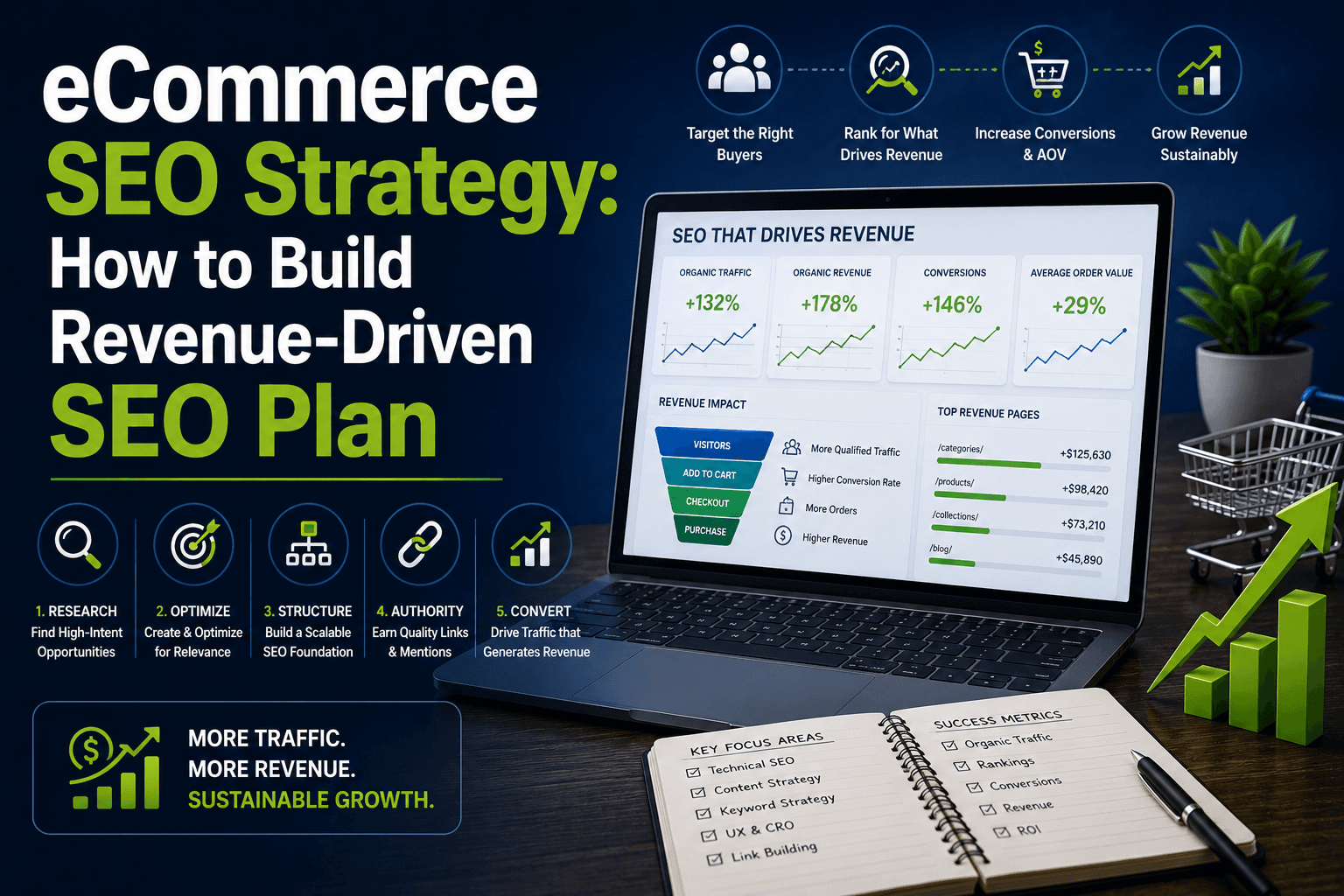
How to Build an eCommerce SEO Strategy That Actually Drives Revenue
Many eCommerce stores see traffic spikes but no real sales growth. That usually means one thing: the SEO strategy is broken.
Ranking for random keywords, publishing blog content without intent, and ignoring category pages leads to traffic that does not convert. You get 10,000 monthly visitors but only 50 sales. The math does not work.
This guide explains how to build a revenue-focused eCommerce SEO strategy that aligns search intent, product pages, and content with real business outcomes. Not vanity metrics. Not feel-good traffic reports. Actual revenue growth that shows up in your P&L statement.
Key Highlights: What You'll Learn
- Revenue Should Be the Primary KPI of Any eCommerce SEO Strategy
- Category Pages Drive Most eCommerce Organic Revenue (60-80% for Successful Stores)
- Keyword Intent Mapping Is Critical for eCommerce SEO Success
- Product Pages Capture Long-Tail Search Demand and Support Category Rankings
- Technical SEO Ensures Search Engines Can Efficiently Crawl Large Product Catalogs
- Content Marketing Supports Product and Category Rankings (But Is Not the Primary Driver)
- Internal Linking Distributes Authority and Guides Users from Content to Conversions
- Backlinks Increase Domain Authority and Improve Category Page Rankings
- SEO and CRO Must Work Together to Turn Traffic into Revenue
- A Structured 90-Day Roadmap Helps eCommerce Stores Scale Organic Growth Systematically
What Is an eCommerce SEO Strategy?
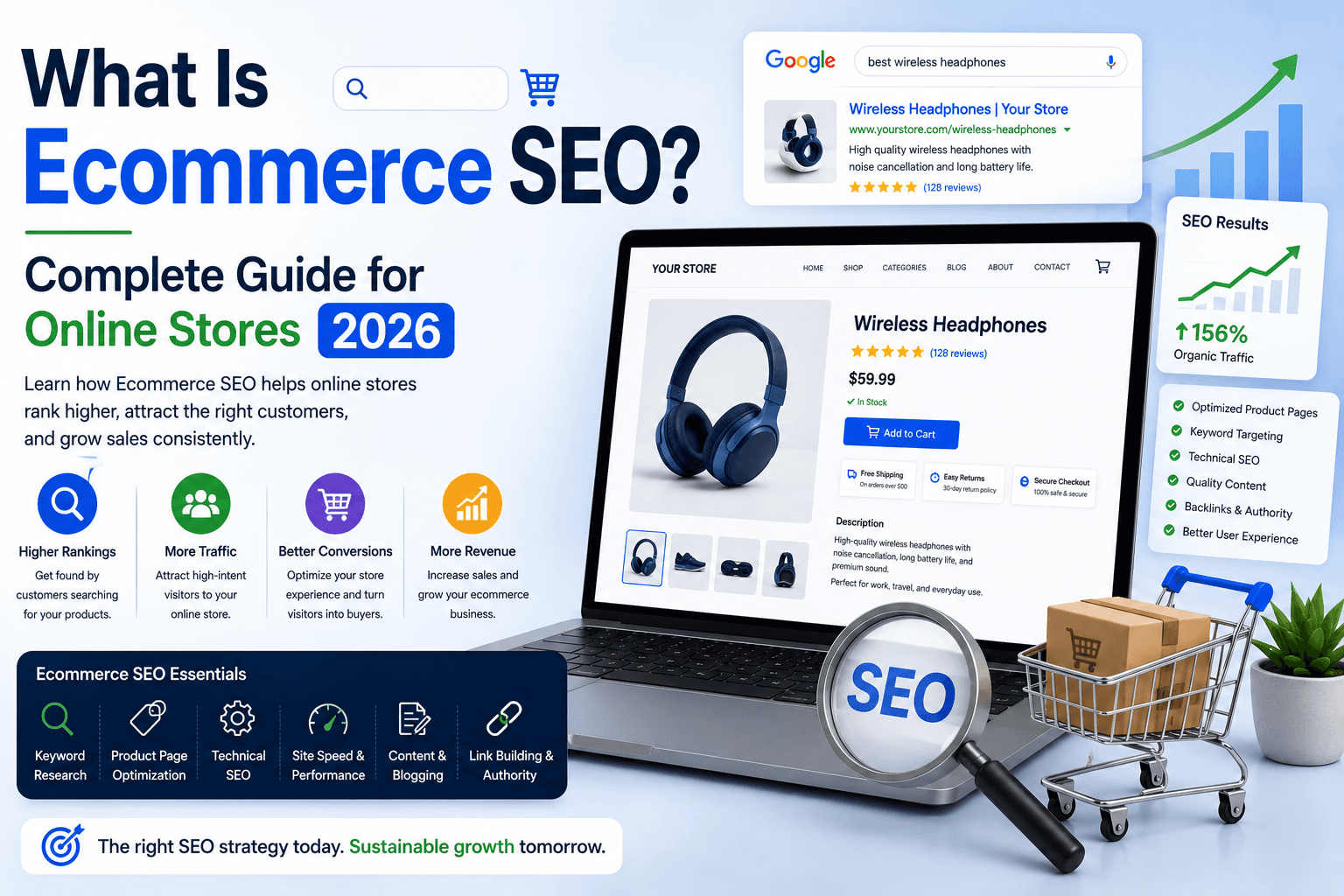
An eCommerce SEO strategy is a structured plan for optimizing product pages, category pages, and supporting content to drive organic traffic that converts into sales.
Unlike general SEO strategy which may prioritize awareness or lead generation, eCommerce SEO strategy directly targets revenue. Every decision—keyword selection, page prioritization, content topics, technical fixes—must answer: "Will this increase organic sales?"
Key components:
- Keyword intent mapping: Classifying keywords by commercial intent and conversion potential
- Page type prioritization: Allocating resources to categories (high revenue) vs products (long-tail) vs content (supporting)
- Technical foundation: Ensuring efficient crawling, indexing, and ranking of large product catalogs
- Content strategy: Creating informational content that supports transactional pages
- Link acquisition: Building domain authority to lift all pages
- Performance measurement: Tracking revenue metrics, not just traffic
Why eCommerce SEO strategy differs from traditional SEO strategy:
Traditional SEO for service businesses focuses on local rankings, lead generation, and informational content. eCommerce SEO focuses on product/category rankings, direct sales, and transactional searches.
Service business SEO optimizes 20-50 pages. eCommerce SEO optimizes 500-50,000 pages at scale.
Service business SEO measures success by leads. eCommerce SEO measures success by revenue and ROI.
The strategic approach must account for constantly changing inventory, duplicate content from variants, competitive pricing pressure, and the need to rank for thousands of keywords across multiple product categories simultaneously.
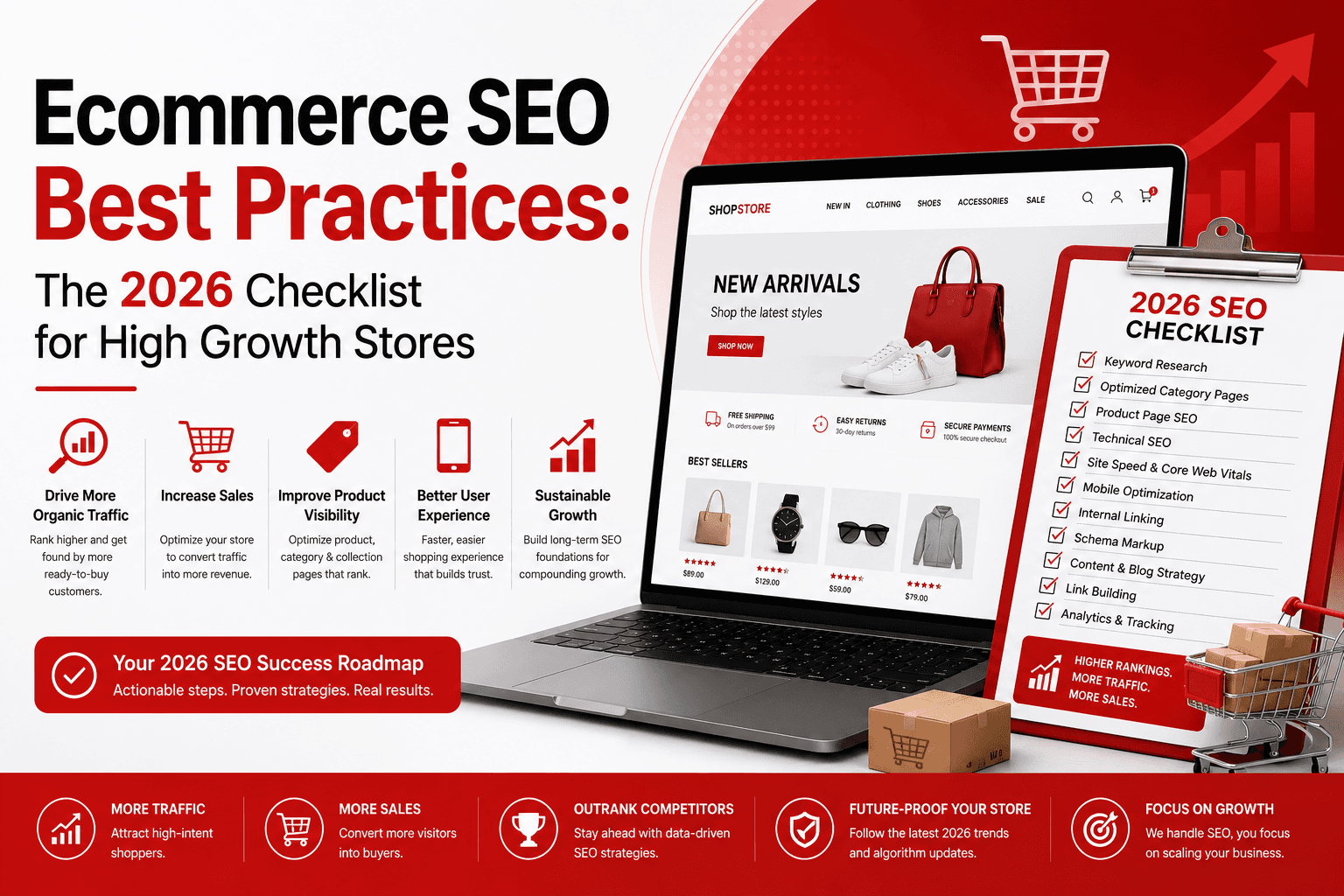
For stores needing foundational tactics before strategy, our eCommerce SEO best practices guide covers the complete tactical checklist.
Why Many eCommerce SEO Strategies Fail
Most eCommerce SEO strategies fail not because of poor execution, but because of flawed strategic priorities from the start.
Problem 1: Targeting Informational Keywords Only
The problem: Focusing on high-volume informational keywords ("how to choose running shoes") while ignoring commercial keywords ("women's running shoes size 8").
The impact: Traffic increases but revenue stays flat. Informational content attracts researchers, not buyers. Conversion rates under 1% waste SEO investment on content that does not pay for itself.
The fix: Map keywords by intent. Allocate 60-70% of effort to transactional/commercial keywords (category and product optimization), 20-30% to commercial investigation keywords (buying guides, comparisons), and only 10-20% to informational keywords (educational content). Prioritize keywords where search intent matches business intent (making sales).
Problem 2: Ignoring Category Pages
The problem: Spending 80% of optimization time on product pages and blog content while leaving category pages unoptimized or thin.
The impact: Missing the 60-80% of organic revenue that category pages generate. Individual product pages get 5-20 visits monthly. Category pages get 500-5,000 visits monthly. Ignoring categories means ignoring revenue.
The fix: Optimize your top 10-20 category pages first before touching product pages. Add 300-500 word descriptions, optimize titles for commercial keywords, implement strategic internal linking, and create FAQ sections. Category optimization shows ROI within 8-12 weeks. Product optimization takes 6-12 months at scale.
For category-specific optimization tactics, our Shopify SEO guide explains platform constraints and solutions.
Problem 3: Poor Internal Linking
The problem: No systematic internal linking between blog content, category pages, and product pages. Relying only on main navigation and product recommendations.
The impact: Authority does not flow to revenue-generating pages. New products take months to get discovered by Google. Blog content exists in isolation without supporting conversions.
The fix: Implement structured internal linking rules: every blog post links to 2-4 relevant category or product pages, every category links to related categories and top products, every product links to parent category and similar products. Use descriptive anchor text. Link early in content (first 300 words). Track which internal links drive conversions.
Problem 4: Technical SEO Issues
The problem: Uncontrolled faceted navigation indexing thousands of filter combinations, slow page speed, missing schema markup, crawl errors blocking products.
The impact: Google wastes crawl budget on duplicate filter pages instead of products. Slow sites rank poorly and convert worse. Missing schema means invisible to AI Overviews and reduced rich snippets.
The fix: Conduct monthly technical audits. Implement strict parameter handling for filters. Optimize Core Web Vitals (INP under 200ms critical for 2026). Add complete Product schema with price/availability matching Merchant Center feed exactly. Monitor Google Search Console for crawl errors weekly.
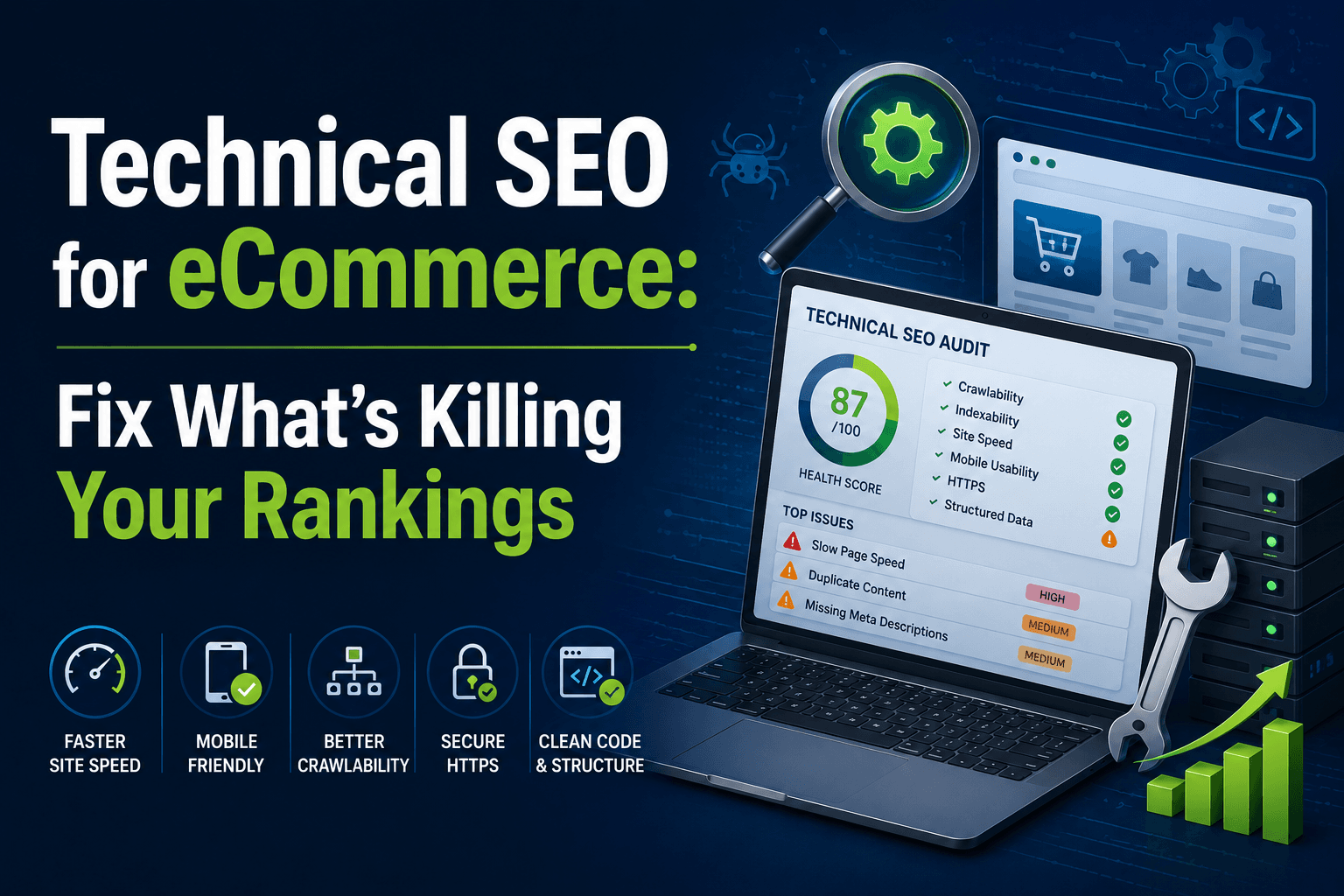
For technical implementation details, our technical SEO for eCommerce guide provides the complete technical checklist.
Problem 5: No Conversion Optimization
The problem: Driving traffic to poorly converting pages. No trust signals, slow checkout, unclear product information, weak calls-to-action.
The impact: Achieving 10,000 monthly organic visits but only 1.2% conversion rate equals 120 sales. Competitors with 5,000 visits and 2.5% conversion rate get 125 sales with half the traffic. SEO investment wasted.
The fix: Optimize for conversions simultaneously with rankings. Add customer reviews with schema, display trust badges, optimize product images, improve checkout flow, reduce page load time. Test conversion improvements with A/B testing. A 1% conversion rate improvement often generates more revenue than doubling traffic.
Step 1: Define Commercial SEO Goals and KPIs
Revenue-focused eCommerce SEO tracks different metrics than awareness-focused SEO.
Primary KPIs (Revenue Metrics):
Organic Revenue
Total revenue from organic search traffic. This is the #1 metric. Target: 20-40% of total revenue from organic for mature stores.
Conversion Rate from Organic Traffic
Percentage of organic visitors who purchase. Benchmark: 1.5-2.5% for eCommerce average, 3-5% for optimized stores. Lower than this indicates intent mismatch or CRO problems.
Revenue Per Organic Session
Average revenue generated per organic visitor. Calculate: Total organic revenue / organic sessions. Benchmark: $1.50-$4.00 depending on average order value.
Organic Revenue ROI
Organic revenue divided by SEO investment. Target: 5:1 minimum, 10:1+ for mature programs. If spending $5,000/month on SEO, generate $25,000-$50,000 monthly organic revenue.
Secondary KPIs (Leading Indicators):
Category Page Rankings
Track your top 20-30 category pages for primary commercial keywords. These drive 60-80% of revenue. Target: Top 5 rankings for your primary categories within 6-12 months.
Product Page Indexation
Percentage of products properly indexed. Target: 95%+ of in-stock products indexed. Use Google Search Console to monitor.
Site Authority (Referring Domains)
Number of unique domains linking to your site. Target: 50-100 for small stores, 200-500 for medium, 1,000+ for large competitive stores. Authority drives category rankings.
Category Page Traffic
Organic traffic to your top category pages. Track monthly trends. Healthy growth: 5-15% month-over-month for new optimization, 2-5% for mature categories.
How to set realistic goals:
Year 1: Technical foundation, top 10 category optimization, 50-100 referring domains, 30-50% organic revenue increase
Year 2: Full category optimization, content marketing scale-up, 100-200 additional referring domains, 50-100% cumulative organic revenue increase
Year 3: Continuous optimization, authority building, 200+ additional referring domains, 2-3x baseline organic revenue
Critical: Measure revenue, not rankings. Ranking #1 for keywords that do not convert is worthless. Track revenue contribution by landing page to identify which pages actually drive sales.
Step 2: Keyword Intent Mapping
Not all keywords are created equal. Revenue-focused strategy prioritizes keywords by conversion potential, not search volume.
The Three Keyword Intent Types
Transactional Keywords (Highest Conversion: 15-25%)
These signal immediate purchase intent.
Examples:
- "buy men's running shoes online"
- "nike air zoom pegasus 40 for sale"
- "women's hiking boots free shipping"
- "gaming laptop under $1000"
Strategic use: Map to category and product pages. Prioritize these keywords in category titles and product optimization. These convert 10-15x better than informational keywords.
Commercial Investigation Keywords (Medium Conversion: 5-10%)
These signal active research before purchase.
Examples:
- "best running shoes for flat feet"
- "nike vs adidas hiking boots comparison"
- "gaming laptop reviews 2024"
- "how to choose hiking boots"
Strategic use: Map to buying guides, comparison pages, and category content. These build confidence and drive high-value transactions. Best paired with category pages targeting the parent product.
Informational Keywords (Lowest Conversion: 1-3%)
These satisfy research intent but rarely lead to immediate purchases.
Examples:
- "how to break in hiking boots"
- "what is drop in running shoes"
- "gaming laptop specifications explained"
Strategic use: Use for blog content that supports transactional pages. Informational content attracts links, builds authority, and introduces products to new audiences. Always link to relevant category or product pages.
Intent Distribution Framework:
- Category pages: 80-100% transactional/commercial keywords
- Product pages: 70-90% transactional, 10-30% commercial investigation
- Blog content: 10-20% transactional (product reviews), 30-50% commercial investigation (buying guides), 30-50% informational
Keyword Research Tools and Process
Start with your product catalog:
- Extract category names, product types, brands, and modifiers (sale, cheap, best, top, reviews)
- Use Google Search Console to identify existing rankings worth optimizing for
- Check competitor keyword rankings for gap analysis
Keyword research tools:
- Ahrefs/SEMrush: Competitor keyword analysis, volume, difficulty
- Google Keyword Planner: Volume estimates, seasonal trends
- Google Autocomplete/People Also Ask: Real search intent signals
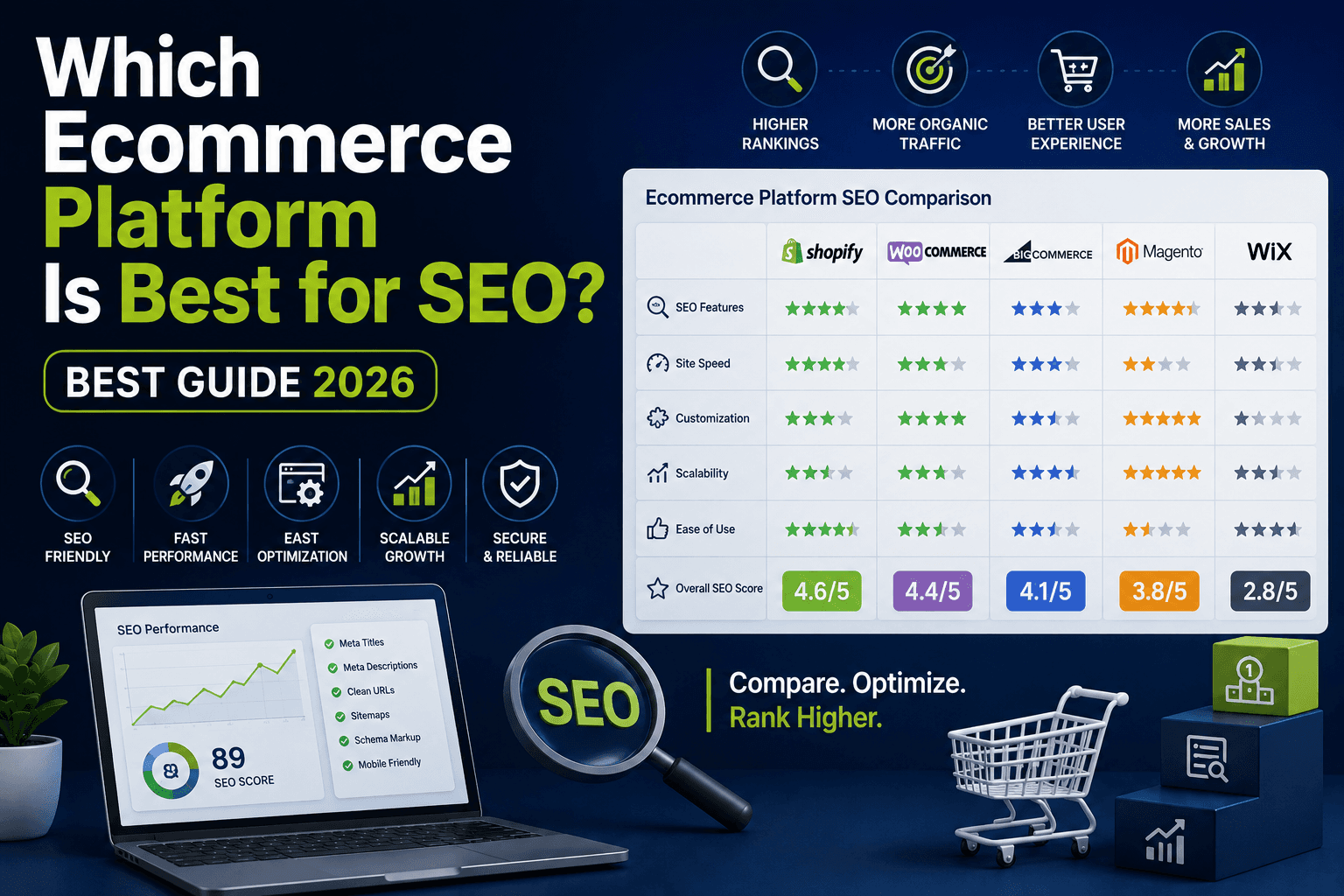
- Amazon/Shopify search: Commercial intent verification
Prioritization matrix:
- High commercial intent + reasonable volume + achievable difficulty = Priority 1
- High intent + low volume + low difficulty = Priority 2 (long-tail capture)
- Low intent + high volume = Deprioritize (vanity keywords)
Step 3: Technical SEO Foundation
Technical SEO determines whether Google can efficiently crawl, index, and rank your product catalog. Major technical issues silently kill revenue.
Crawl Efficiency
Product discovery speed: How fast Google discovers and indexes new products. Target: New products indexed within 48-72 hours of publication.
Crawl budget allocation: How much crawl capacity Google spends on your site. Optimize by: noindexing thin filter pages, implementing canonical tags correctly, submitting XML sitemaps weekly, monitoring crawl stats in Google Search Console.
Duplicate content handling: Product variants (size/color) create duplicate content. Solution: Use hreflang for regional variants, implement faceted navigation parameters, set canonical to parent product for variants.
Site Architecture
Flat architecture: Category pages within 3 clicks from homepage. No product deeper than 4 clicks. Deep nesting kills category page authority.
Logical hierarchy: Homepage > Category > Subcategory > Product. Each level should target distinct keyword intents.
Internal linking context: Link context matters. Links from topically relevant pages pass more authority than random footer links.
Core Web Vitals for eCommerce
LCP (Largest Contentful Paint) < 2.5s: Optimize hero images, server response time, render-blocking resources.
INP (Interaction to Next Paint) < 200ms: Critical for 2026 ranking factor. Optimize JavaScript execution, defer non-critical scripts, minimize main thread work.
CLS (Cumulative Layout Shift) < 0.1: Reserve space for images, ads, and dynamic content. Prevent checkout form shifts.
Mobile-first: 75%+ of eCommerce traffic is mobile. Test on real devices. Touch targets minimum 48px.
Schema Markup for eCommerce
Product schema is mandatory for eCommerce. Required fields:
- name, image, description, sku, brand
- offers (price, priceCurrency, availability)
- aggregateRating (if applicable)
Critical: Price and availability in schema must EXACTLY match your Google Merchant Center feed. Mismatches cause disapprovals and lost rich snippets.
Additional schema recommendations: BreadcrumbList (navigation context), FAQPage (for category pages), HowTo (for product guides), Organization (brand authority).
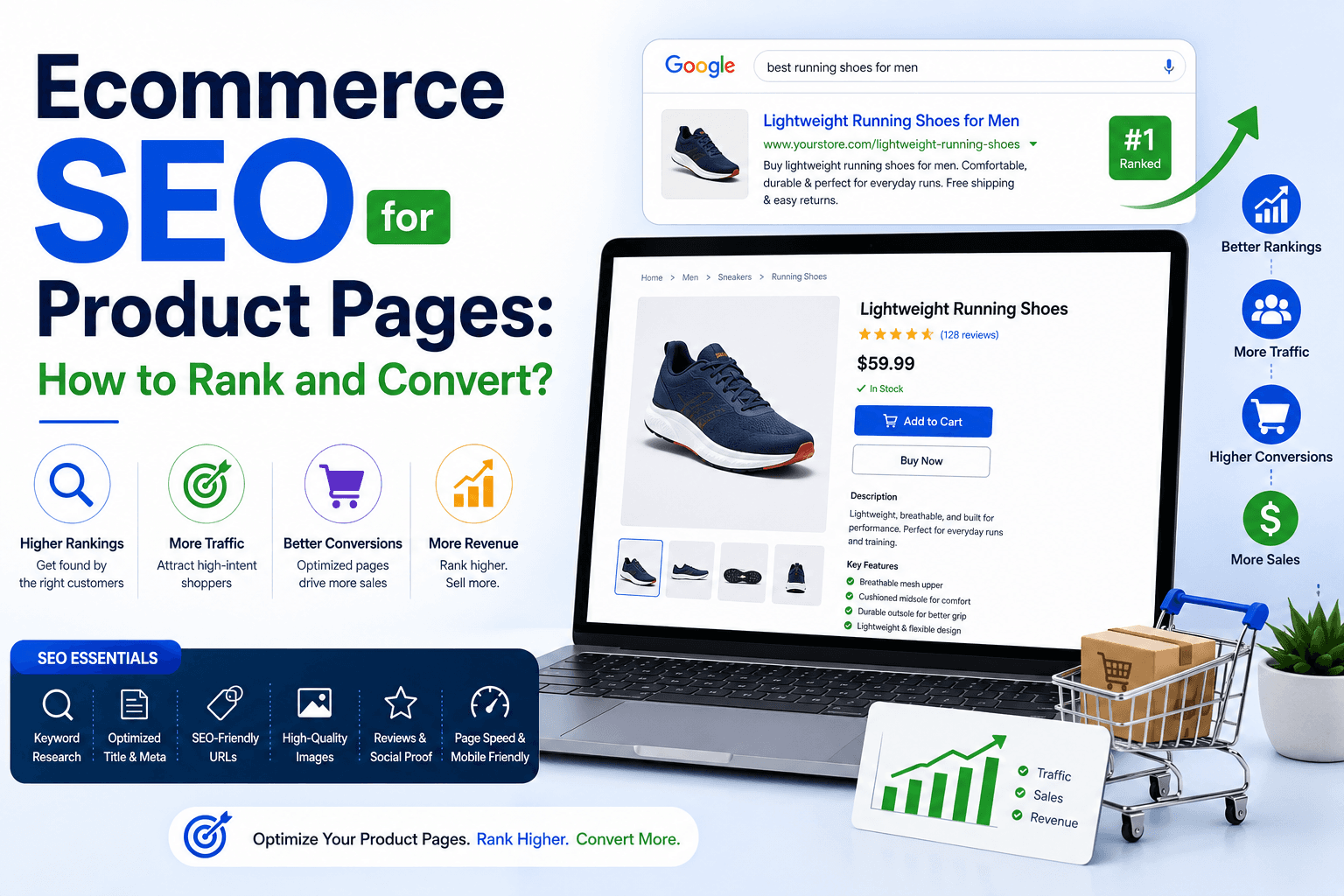
Step 4: On-Page SEO for Categories and Products
Category Page Optimization
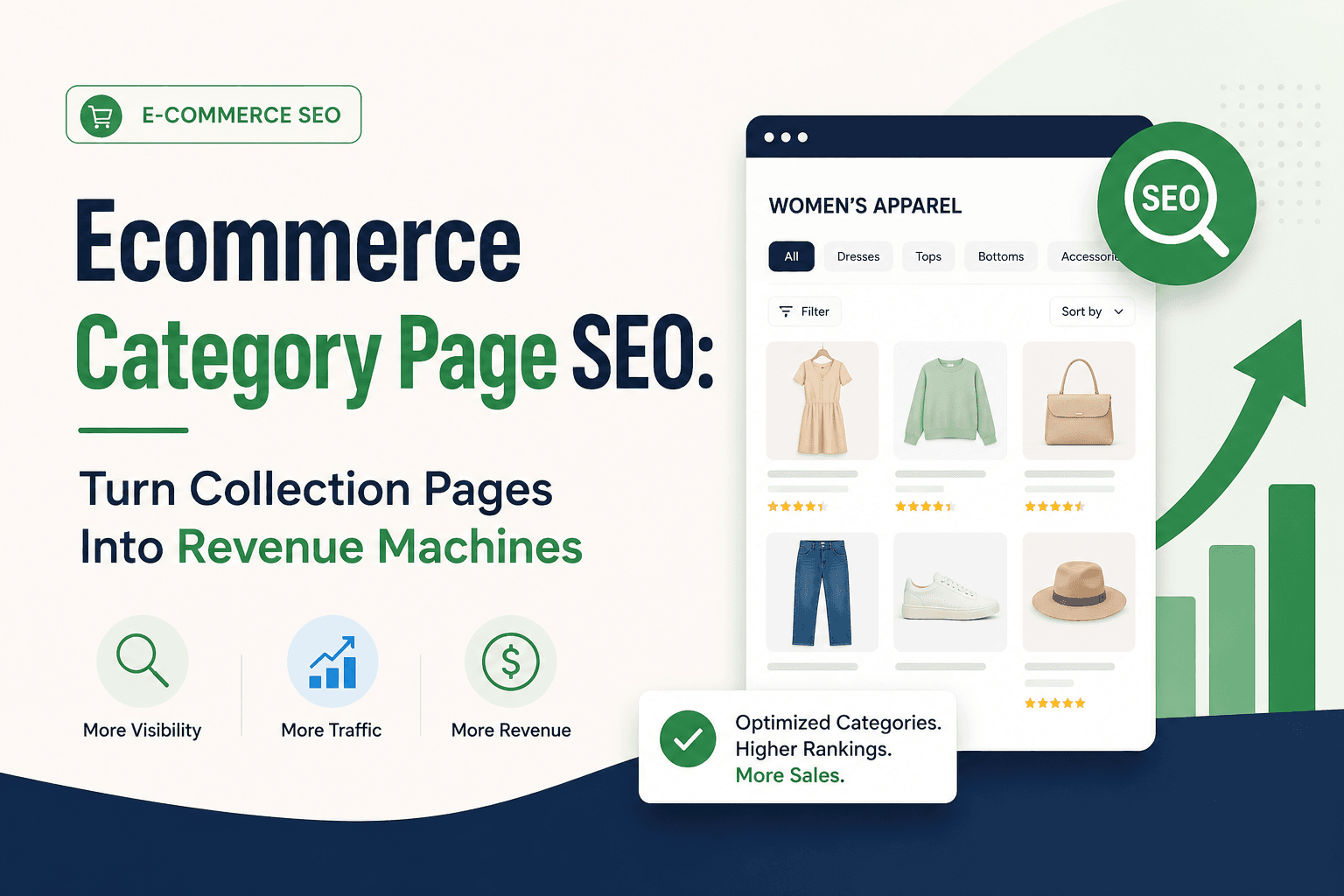
Category pages are the highest-value optimization targets for eCommerce SEO. They drive 60-80% of organic revenue for successful stores.
Title tag formula:
"[Primary Keyword] | [Brand]" or "[Primary Keyword] - [Secondary Keyword] | [Brand]"
Example: "Men's Running Shoes - Best Selection Online | Nike"
Meta description formula:
"[Primary keyword] with [benefit]. [X] products available. [USP]. [Call to action]."
Example: "Shop men's running shoes with free shipping. 150+ styles available. Expert recommendations. Buy now."
H1 optimization:
Include primary keyword and differentiating term if possible. Avoid generic H1s like "Products" or "Category."
Category description:
300-500 words minimum. Include primary keyword in first 100 words. Cover: what the category includes, key benefits, popular styles/types, who it's for.自然地自然地自然地自然.
Internal linking from category pages:
- Link to related categories (cross-sell opportunity)
- Feature top 3-5 products with links
- Include blog content links where relevant
- Use descriptive anchor text (not "click here")
Product Page Optimization
Product pages capture long-tail search demand and support category page rankings. Each product page should target specific long-tail keywords.
Title tag formula:
"[Product Name] - [Key Spec/Feature] | [Brand]"
Example: "Nike Air Zoom Pegasus 40 - Women's Running Shoes | Nike"
Product description optimization:
- Minimum 300 words for SEO value
- Include primary keyword, secondary keywords, and natural language
- Cover: product benefits, specifications, use cases, what's included
- Avoid manufacturer descriptions (duplicate content issue)
Image optimization:
- Primary image: descriptive filename (nike-air-zoom-pegasus-40-womens-black.jpg)
- Alt text: descriptive and includes target keyword
- Multiple angles and zoom capability
- Compress for speed (WebP format recommended)
Step 5: Content Marketing Strategy
Content marketing supports product and category rankings but is not the primary driver of eCommerce SEO success. Resources must be allocated proportionally.
Content Types and ROI
Buying Guides (High ROI)
Commercial investigation keywords. Guide users from research to purchase decision. Include product recommendations with links to category pages.
Examples: "Best Running Shoes for Marathon Training 2024", "How to Choose the Right Laptop for Video Editing"
Product Comparisons (Medium-High ROI)
Commercial investigation keywords. Compare products within your catalog to drive category page traffic.
Examples: "Nike Pegasus 40 vs Brooks Ghost 15: Which is Right for You?"
How-To Content (Medium ROI)
Educational content that demonstrates expertise. Can include product recommendations naturally.
Examples: "How to Break In New Hiking Boots Without Blisters"
Informational Content (Low ROI)
Builds authority and attracts links. Important for brand positioning but rarely drives direct revenue. Limit to 20% of content budget.
Examples: "The History of Running Shoe Technology"
Content-to-Conversion Funnel
Every piece of content should have a conversion path:
- Top of funnel: Informational content builds awareness, introduces brand
- Middle of funnel: Buying guides and comparisons build consideration
- Bottom of funnel: Product-focused content drives purchase decisions
Call-to-action placement: Every page should include at least one relevant CTA linking to a category or product page. Don't leave readers stranded in content without a next step.
Content Production Frequency
Small stores (under 500 products): 2-4 high-quality articles monthly. Focus on top 10 category pages.
Medium stores (500-5,000 products): 4-8 articles monthly. Cover major categories and seasonal trends.
Large stores (5,000+ products): Consider programmatic content, user-generated reviews, and faceted category content over traditional blog posts.
Step 6: Link Building for eCommerce
Backlinks increase domain authority and lift all pages, especially category pages. But eCommerce link building requires different tactics than service business SEO.
eCommerce Link Building Tactics
Product Link Building
Get products included in "best of" lists and gift guides. Outreach to bloggers, journalists, and content creators who publish product roundups.
Digital PR
Newsworthy data, original research, expert commentary. Earn coverage that links to relevant category or product pages.
Resource Page Outreach
Find resource pages, tool lists, and industry directories. Request inclusion for relevant product categories.
Broken Link Building
Find broken links on relevant sites, create replacement content on your site, suggest your page as the replacement.
Internal Link Architecture
Internal links distribute authority from high-authority pages to revenue-generating pages.
Hierarchical linking:
Homepage links to top categories. Categories link to subcategories and featured products. Products link to parent category and related products.
Content linking rules:
- Every blog post links to 2-4 relevant category or product pages
- Link within first 300 words for maximum authority pass-through
- Use descriptive, keyword-rich anchor text
- Update old content with new product links when products launch
Step 7: CRO and SEO Integration
SEO and CRO must work together to turn traffic into revenue. High rankings with poor conversion waste SEO investment.
Conversion-Critical Elements
Product pages: High-quality images with zoom, clear price with shipping info, prominent add-to-cart, stock availability, customer reviews with schema.
Category pages: Effective filtering, clear product thumbnails, quick-view option, sort by popularity/rating, visible trust signals.
Checkout: Guest checkout option, progress indicator, clear return policy, trust badges, multiple payment options.
A/B Testing Framework
Test elements that impact both SEO and conversion:
- Title tags and meta descriptions (CTR and conversion)
- H1 headlines (engagement and conversion)
- CTA button text and placement
- Product image presentation
- Review display format
Important: When A/B testing titles, use 50/50 traffic splits with sufficient sample size. Move results to 100% only after statistical significance.
Revenue Attribution
Track which pages drive revenue, not just traffic:
Google Analytics: Set up eCommerce tracking. Analyze organic landing page performance. Identify which category and product pages generate revenue vs. just traffic.
Revenue per page report: Sort landing pages by revenue contribution. Prioritize optimization of high-revenue, high-traffic pages.
The 90-Day eCommerce SEO Roadmap
Structured execution beats sporadic effort. This roadmap prioritizes the 20% of work that generates 80% of results.
Days 1-30: Technical Foundation
- Conduct comprehensive technical SEO audit
- Fix crawl errors and indexation issues
- Implement XML sitemaps and submit to Google Search Console
- Add/repair Product schema markup on all product pages
- Optimize Core Web Vitals (focus on mobile)
- Implement canonical tags and parameter handling
- Audit internal linking structure
Days 31-60: Category Optimization
- Identify top 10-20 revenue-driving category pages
- Optimize title tags for commercial keywords
- Write 300-500 word optimized category descriptions
- Implement strategic internal linking to category pages
- Add FAQ schema to category pages
- Monitor category page rankings and traffic weekly
- Begin link building outreach for category pages
Days 61-90: Content and Scaling
- Publish 2-3 buying guides targeting high-value category keywords
- Implement internal linking from new content to category/product pages
- Optimize top 10 product pages (title tags, descriptions, images, schema)
- Expand link building to product mentions and gift guides
- Review first 60 days data: identify wins, pause underperformers
- Set up ongoing cadence: monthly audits, weekly ranking monitoring
- Plan Q2 content calendar based on keyword data and revenue attribution
Ongoing Priorities
Month 2+: Continue expanding optimization to remaining categories and products. Scale content production. Build authority through consistent link acquisition. Monitor Core Web Vitals monthly.
Month 4+: Begin programmatic content for long-tail product keywords. Implement conversion rate optimization testing. Expand to international SEO if applicable.
Month 6+: Full category optimization complete. Focus shifts to product page scale, authority building, and advanced CRO.
Measuring eCommerce SEO Success
Revenue-focused measurement ensures you track what matters: actual business outcomes, not vanity metrics.
Monthly Scorecard Metrics
- Organic revenue (primary KPI)
- Organic revenue as % of total revenue
- Organic conversion rate
- Revenue per organic session
- Top 10 category page rankings
- Referring domain growth
- Core Web Vitals pass rate
Quarterly Strategic Review
Quarterly reviews should assess strategic direction, not just tactical execution:
Are we targeting the right keywords (high commercial intent)?
Are optimized pages actually converting (revenue attribution)?
Is our content supporting product/category rankings?
Are we investing enough in technical SEO vs. content?
Is SEO ROI meeting targets (5:1 minimum)?
Common Measurement Mistakes
Tracking rankings instead of revenue: #1 ranking for "best running shoes" is worthless if it drives no sales.
Measuring traffic instead of conversions: 10,000 visitors at 1% conversion is worse than 5,000 visitors at 3% conversion.
Ignoring attribution complexity: Blog content often assists final conversion. Use multi-touch attribution models.
Short measurement windows: eCommerce SEO takes 6-12 months to show full impact. Patience and consistent execution are essential.
Conclusion: Execute for Revenue
Building a revenue-focused eCommerce SEO strategy requires strategic clarity, technical foundation, and consistent execution.
The core framework:
- Start with category pages (60-80% of revenue)
- Target commercial keywords (intent = purchase)
- Build technical foundation first (crawl, index, speed)
- Create content that supports, not replaces, product pages
- Measure revenue, not rankings
- Integrate SEO and CRO from day one
Most stores fail because they optimize for traffic instead of revenue, ignore category pages for blog content, and give up before seeing results (6-12 month timeline).
The stores that succeed treat SEO as a revenue channel, not a marketing tactic. They build structured optimization programs, track business outcomes, and iterate based on data.
Start your 90-day roadmap today. Category optimization shows ROI within 8-12 weeks. That early revenue funds continued growth.
Ready to Build Your Revenue-Driven SEO Strategy
Most eCommerce stores struggle with SEO strategy not because they lack effort, but because they lack strategic clarity on what actually drives revenue vs what generates vanity metrics.
Our team specializes in building revenue-focused eCommerce SEO strategies for Australian stores. We prioritize the 20% of work that generates 80% of results—category optimization, high-intent keywords, technical foundations, and systematic execution.
Request Your Free eCommerce SEO Strategy Session
What you'll get:
- 60-minute strategy consultation analyzing your current SEO performance
- Revenue opportunity assessment (realistic growth projections)
- Customized 90-day roadmap prioritized by revenue impact
- Competitive analysis identifying gaps and opportunities
- Resource and budget recommendations
Or start with an audit:
Includes:
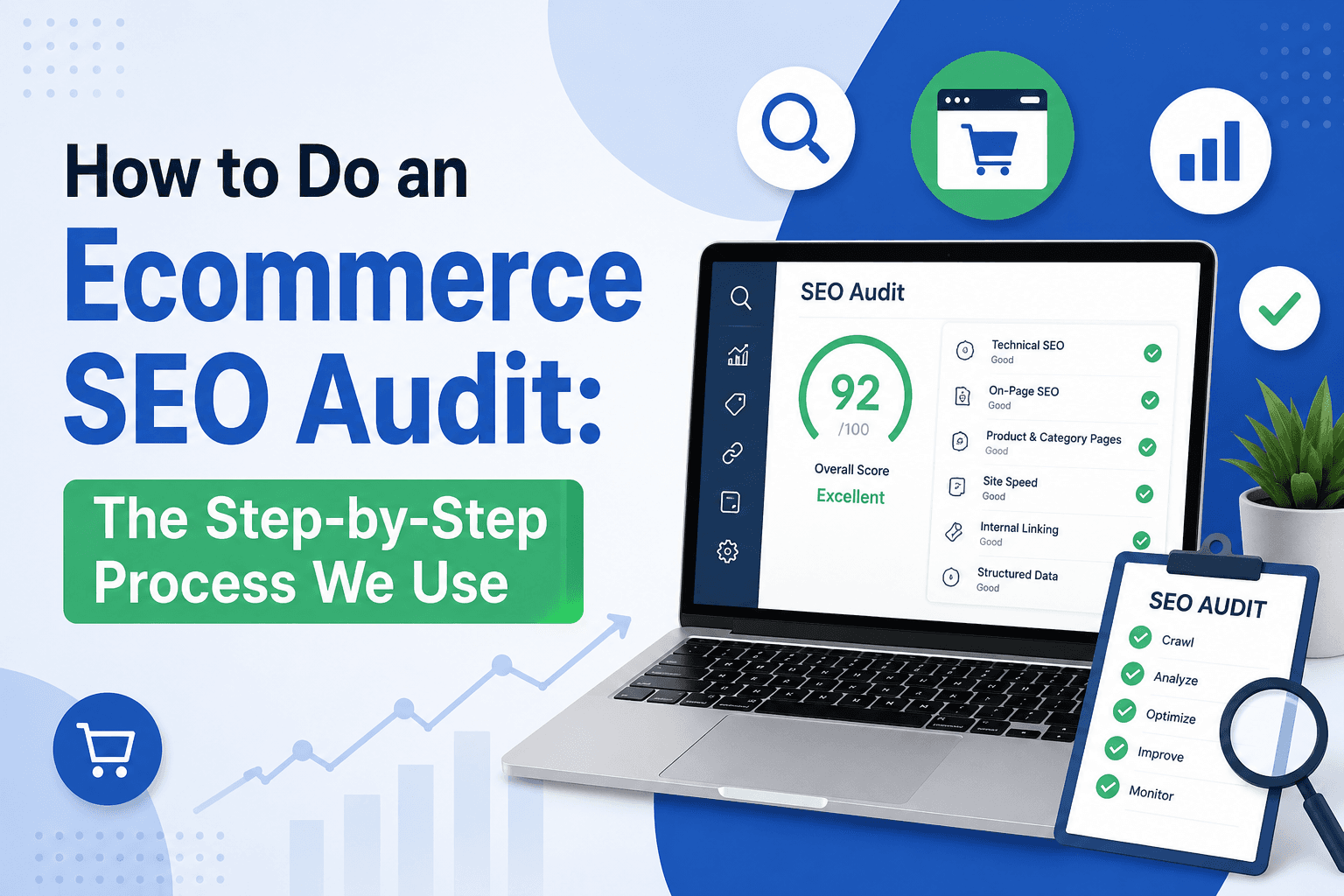
- Complete technical SEO audit (crawl, indexation, Core Web Vitals, schema)
- Category and product page analysis
- Keyword opportunity analysis with intent mapping
- Backlink profile review
- Prioritized action plan with revenue impact estimates
For stores needing tactical implementation guidance, read our eCommerce SEO best practices checklist. To understand platform-specific constraints, see our Shopify SEO guide. For common issues blocking growth, review our common eCommerce SEO mistakes guide. Explore our eCommerce development services to see how The Development builds SEO-optimized stores for Australian businesses.