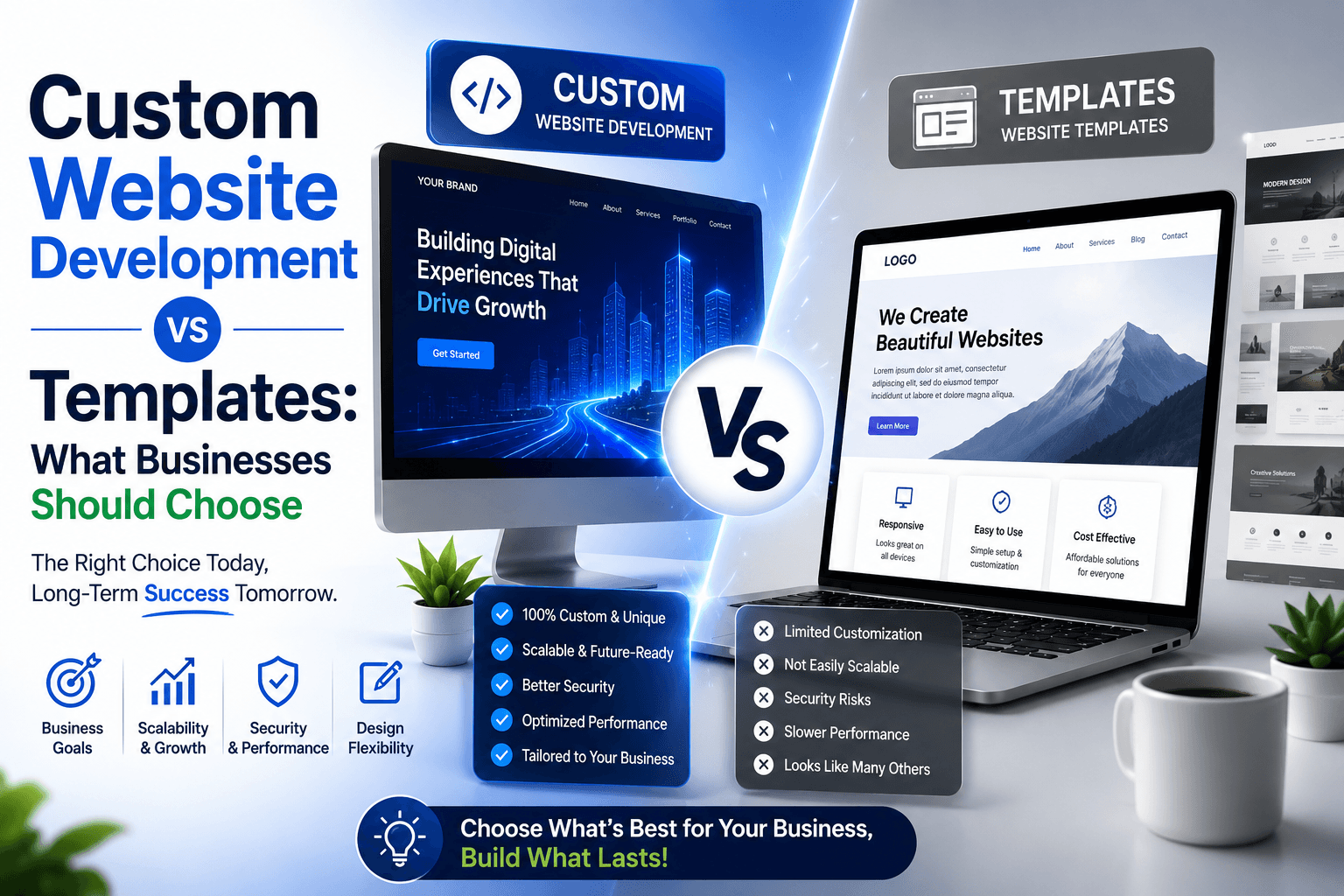
Custom Website Development vs Templates: What Businesses Should Choose
You need a website. You know this. But should you pay $15/month for a Wix template or invest $20,000 in custom development?
This is not a trivial question. The wrong choice costs you either wasted money on unnecessary custom development or years of lost revenue from a template that cannot scale with your growth.
Every agency selling custom development will tell you templates are terrible. Every website builder will tell you custom development is overpriced. Neither is being completely honest.
This guide explains exactly when templates work, when they fail, and when custom development becomes worth the investment. No agency sales pitch. Just decision frameworks based on what actually matters for your business.
What Is Custom Website Development?
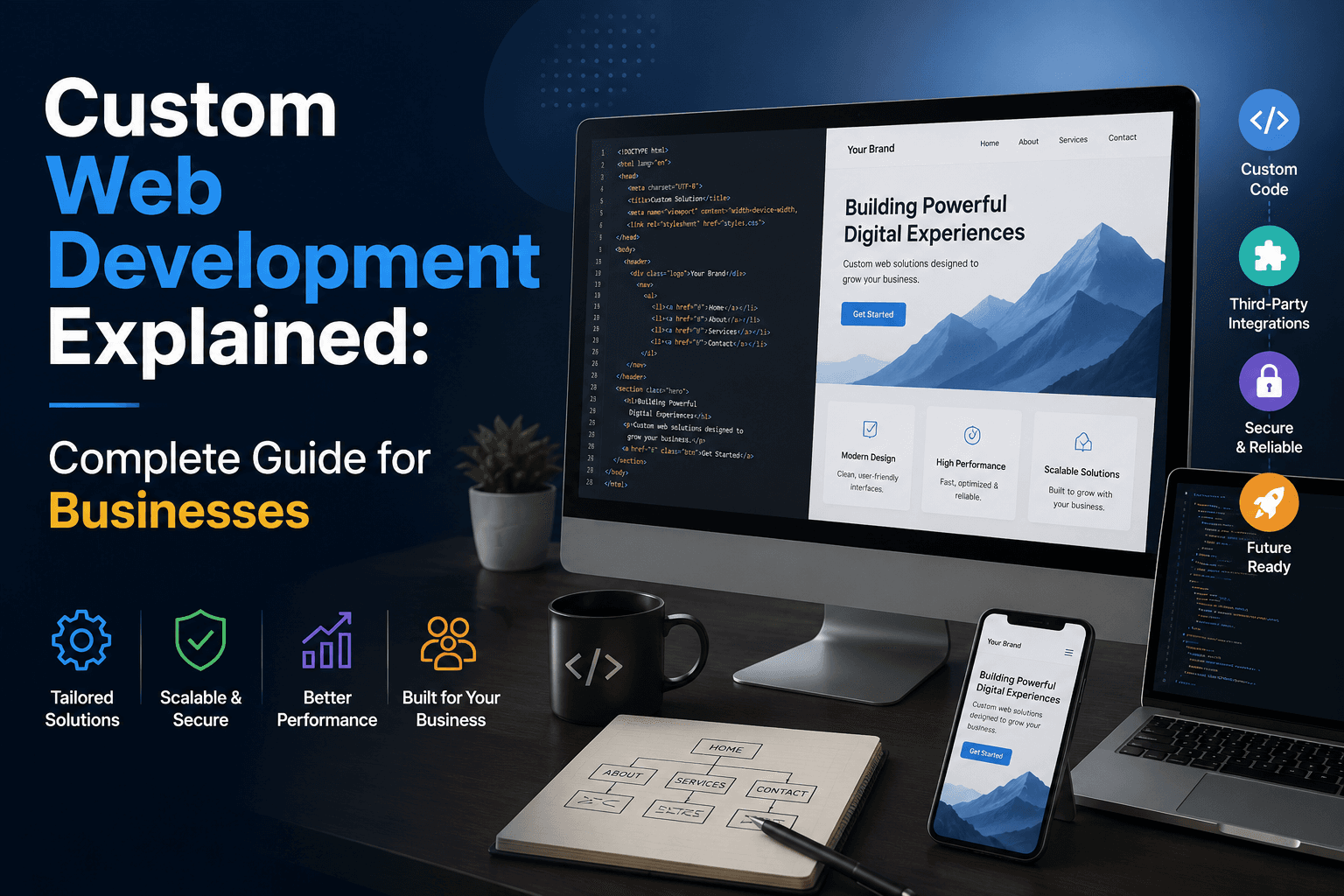
Custom website development is building a website from scratch, designed specifically for your business requirements, workflows, and growth plans.
What this actually means:
- A designer creates visual designs unique to your brand
- A developer writes code specifically for your website
- Features are built to match your exact requirements
- You own all code and intellectual property
- Changes and additions are possible without platform limitations
What custom development does NOT mean:
- Using WordPress with a custom theme is NOT fully custom (it is a hybrid approach)
- Hiring a freelancer to customize a template is NOT custom development
- Building on any platform (Shopify, Webflow, etc.) is NOT fully custom
True custom development in 2026 is often API-first or headless architecture. This means starting with a blank slate for your user experience and writing custom code that orchestrates your various business tools (CRM, ERP, payment processors, inventory systems) into one seamless, lightning-fast interface. You own the orchestration layer, the logic that connects everything, which is the true competitive advantage. No platform constraints. No theme limitations. Complete control over how your systems work together.
What Are Template Websites?
Template websites use pre-designed layouts and pre-built code that you customize with your content, colors, and images.
Popular template platforms:
- Wix, Squarespace, Weebly (drag-and-drop builders)
- WordPress with themes (semi-custom approach)
- Shopify with themes (eCommerce focused)
- Webflow (more advanced visual builder)
How templates work:
- Choose a template from hundreds or thousands of options
- Replace demo content with your own
- Adjust colors and fonts to match your brand
- Add or remove sections using visual editors
- Publish without writing code
Templates are pre-built solutions. You are renting space on someone else's platform and customizing within their constraints.
Custom vs Template: Direct Comparison
The decision comes down to five factors: control, cost, timeline, scalability, and performance.
Factor | Template Website | Custom Development |
Upfront Cost | $500 - $5,000 | $15,000 - $100,000+ |
Monthly Cost | $15 - $300/month platform fees | $50 - $500/month hosting only |
Build Timeline | 1 - 4 weeks | 12 - 24 weeks |
Design Flexibility | Limited to template structure | Unlimited |
Feature Additions | Only if platform supports it | Anything is possible |
Performance | Average (shared resources, poor INP from main thread blocking) | Optimized for Core Web Vitals including INP |
SEO Control | Platform-dependent | Full control over technical SEO |
Ownership | Rent (lose everything if you stop paying platform) | Own orchestration layer and code (still use SaaS APIs for payments, email, etc.) |
Integration Capability | Limited to platform's supported integrations | Unlimited API integrations |
Scalability | Breaks at high traffic or complex needs | Scales infinitely |
Mobile Optimization | Automatic (platform handles it) | Custom-built for all devices |
Updates and Maintenance | Platform handles it | You pay developer for updates |
Learning Curve | Easy (visual drag-and-drop) | Requires developer for all changes |
Exit Strategy | Difficult (locked to platform) | Easy (own all code) |
The honest truth: Templates are genuinely better for 80% of small businesses. Custom development is only worth it when templates actually block your growth or competitive advantage.
Are Template Websites Good for Businesses?
Yes, for most small businesses launching their first website or testing market demand.
Templates work well when:
Your Business Model Fits Standard Patterns
If you are a service business showing services, case studies, and contact information, templates handle this perfectly.
Examples:
- Consulting firms
- Local service businesses (plumbers, electricians, landscapers)
- Professional services (lawyers, accountants, doctors)
- Restaurants and cafes
- Gyms and fitness studios
These businesses need information display, not complex functionality. Templates excel at this.
You Need Fast Market Validation
Launching a new business or testing a new offer? Build with a template first.
Why: You need to validate demand before investing in custom development. A template website gets you to market in weeks, not months. If the business model fails, you lose $2,000, not $30,000.
Real example: A coaching business launches with Squarespace for $500. After 6 months and 50 clients, they know the model works. Now custom development makes sense to build unique booking and client management features.
Your Traffic Is Under 10,000 Monthly Visitors
Templates handle normal traffic levels without performance issues.
Performance threshold: Most template platforms handle 5,000 to 10,000 monthly visitors before you notice slowdowns. If your traffic is below this, performance is not your constraint.
Budget Is Genuinely Limited
If you have $3,000 for a website, custom development is not an option. A well-built template site beats no website.
Budget allocation: Spend $500 - $2,000 on professional template customization rather than $3,000 on the cheapest offshore developer. You get better quality and ongoing support.
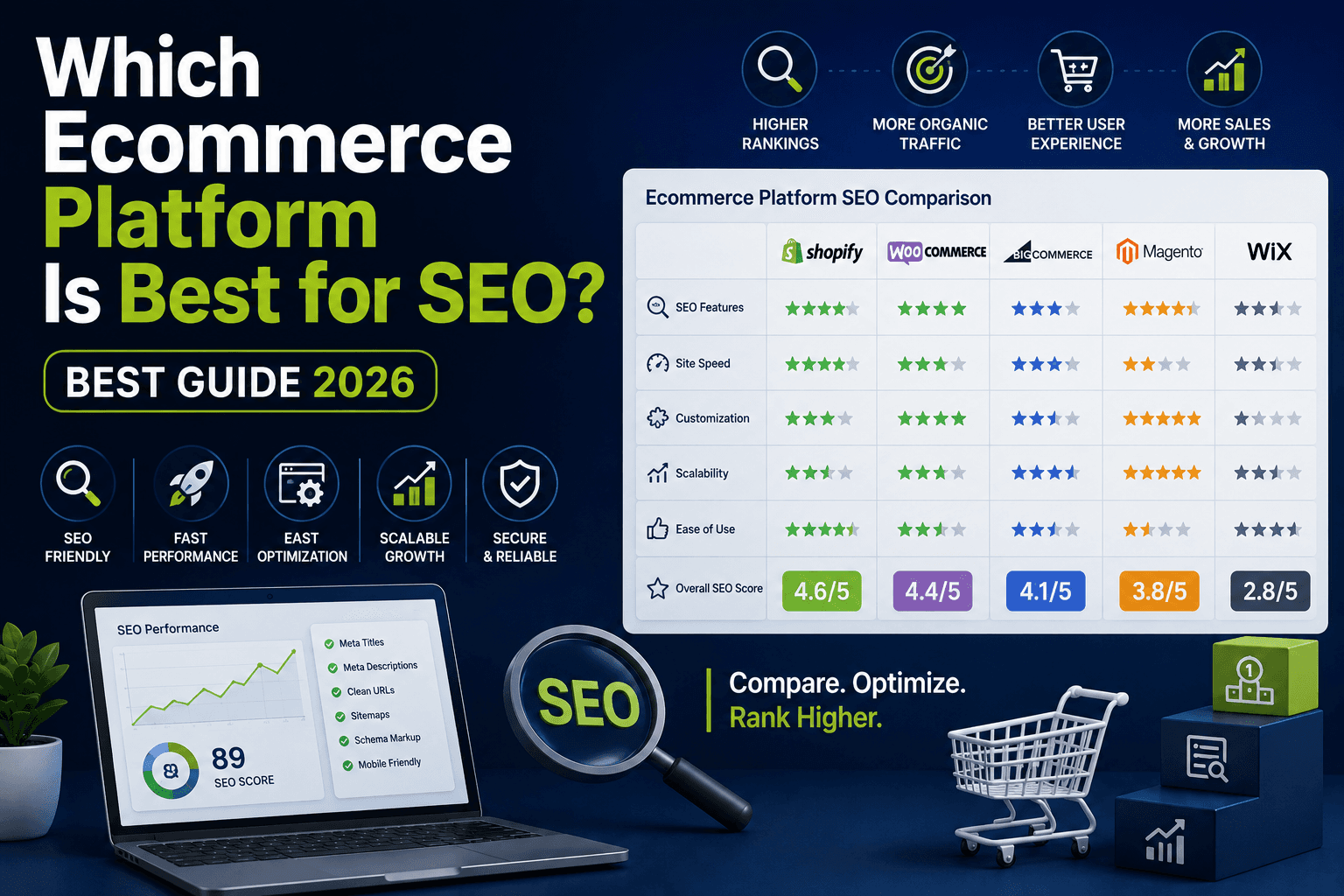
For businesses exploring template options for eCommerce, our guide on which eCommerce platform is best for SEO explains when Shopify templates work versus when custom is justified.
When Templates Fail: The Breaking Points
Templates work until they do not. Here are the exact scenarios where templates block growth.
1. You Need Features Your Platform Does Not Support
The problem: Platforms only support features they have built or approved through their app marketplace.
Real examples:
- Custom quoting system that calculates pricing based on 15+ variables
- Multi-step forms with conditional logic specific to your workflow
- Custom dashboards showing client-specific data
- Integration with legacy systems or proprietary software
What happens: You request the feature. Platform says "not supported." You are stuck. You either abandon the feature or rebuild everything on a custom platform.
2. Performance Is Costing You Revenue
The problem: Templates share server resources with thousands of other sites on the same platform, and worse, suffer from main thread blocking.
Performance impact:
- Page load time exceeds 3 seconds (conversion probability drops 32%)
- Interaction to Next Paint (INP) is poor - the page looks ready but buttons do not work for 3 to 5 additional seconds
- Mobile performance suffers from platform bloat
- Checkout abandonment increases with each loading delay
The 2026 reality: Templates often suffer from "interaction lag" where the page appears loaded visually, but users cannot click buttons or fill forms because the platform's background JavaScript is still executing. This is called main thread blocking. Google's INP metric (which replaced First Input Delay in 2024) penalizes this heavily in search rankings.
Data point: According to Google, 53% of mobile users abandon sites that take over 3 seconds to load. If your template loads in 4 to 5 seconds, you lose half your mobile traffic before they see your content. Even worse, if your INP exceeds 500ms, your Google rankings drop significantly.
3. Platform Changes Break Your Business
The problem: When platforms update their systems, your website can break or require expensive rebuilds.
Recent examples:
- Shopify regularly deprecates APIs, breaking custom integrations
- Wix changed their editor, making old sites incompatible with new features
- Squarespace increased prices 30% in 2024 with no grandfather clause
The risk: Your business becomes dependent on another company's decisions. When they change pricing, features, or terms, you must adapt or migrate.
4. You Need Advanced Analytics and Custom Reporting
The problem: Template platforms provide standard analytics that may not match your business metrics.
When this matters:
- Custom conversion funnels unique to your sales process
- Integration with internal business intelligence tools
- Real-time data visualization beyond basic charts
- Predictive analytics for inventory or demand forecasting
5. Compliance Requirements Exceed Platform Capabilities
The problem: Some industries require custom compliance features that platforms cannot accommodate.
Examples:
- Healthcare (HIPAA-compliant patient portals)
- Finance (custom lending calculations and disclosures)
- Legal (court-specific document handling)
- Government (WCAG 2.1 AAA compliance beyond standard)
When Custom Development Makes Sense
Custom development is worth the investment when one or more of these conditions apply:
- Templates demonstrably block revenue (measurable conversion loss from platform limitations)
- Your core differentiation depends on unique digital functionality
- You process over $1M annually through the website
- Compliance or security requirements exceed platform capabilities
- You need deep integrations with internal systems (ERP, CRM, proprietary tools)
The calculation: If a custom website costs $50,000 and increases conversions by just 10%, calculate your payback period. If you currently convert at 2% with 10,000 monthly visitors generating $500,000 in revenue, a 10% improvement equals $50,000 additional annual revenue. The custom site pays for itself in year one.
The Framework: Which Should You Choose?
Use this decision tree:
- Are you launching a new business or testing a market? → Templates first
- Is your business model standard (services, info, basic eCommerce)? → Templates work
- Is your traffic under 10,000 monthly visitors? → Templates are fine
- Do you need features that platforms don't support? → Custom required
- Is performance costing you measurable revenue? → Custom justified
- Is your revenue over $1M annually? → Custom often pays off
Templates are the right choice for most. Custom development is the right choice when templates block growth.
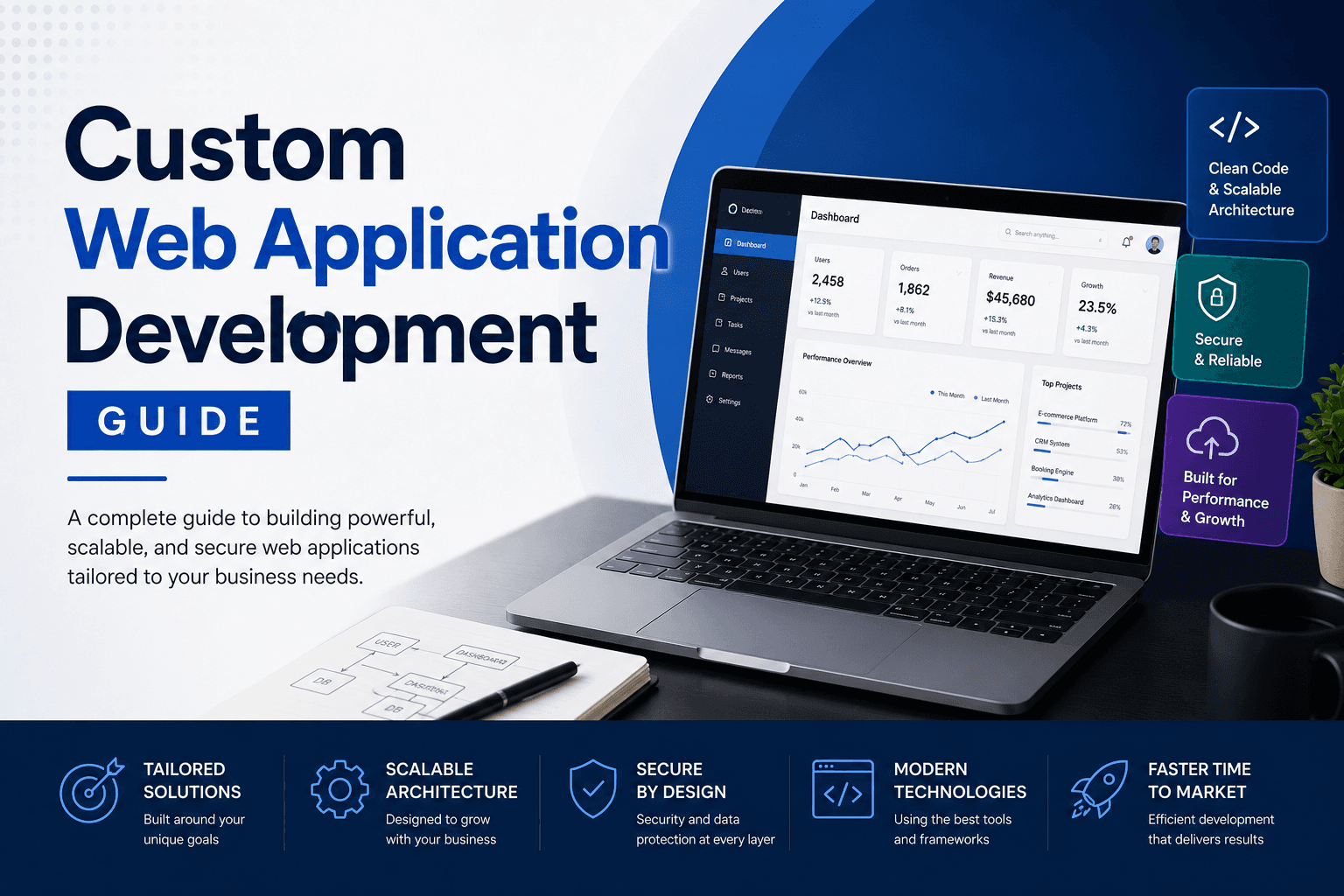
Looking for guidance on eCommerce platforms? Read our comparison of which eCommerce platform is best for SEO. Wondering about custom development ROI? See our custom web development guide. Explore our custom web development services to see how The Development builds websites and platforms for Australian businesses.